
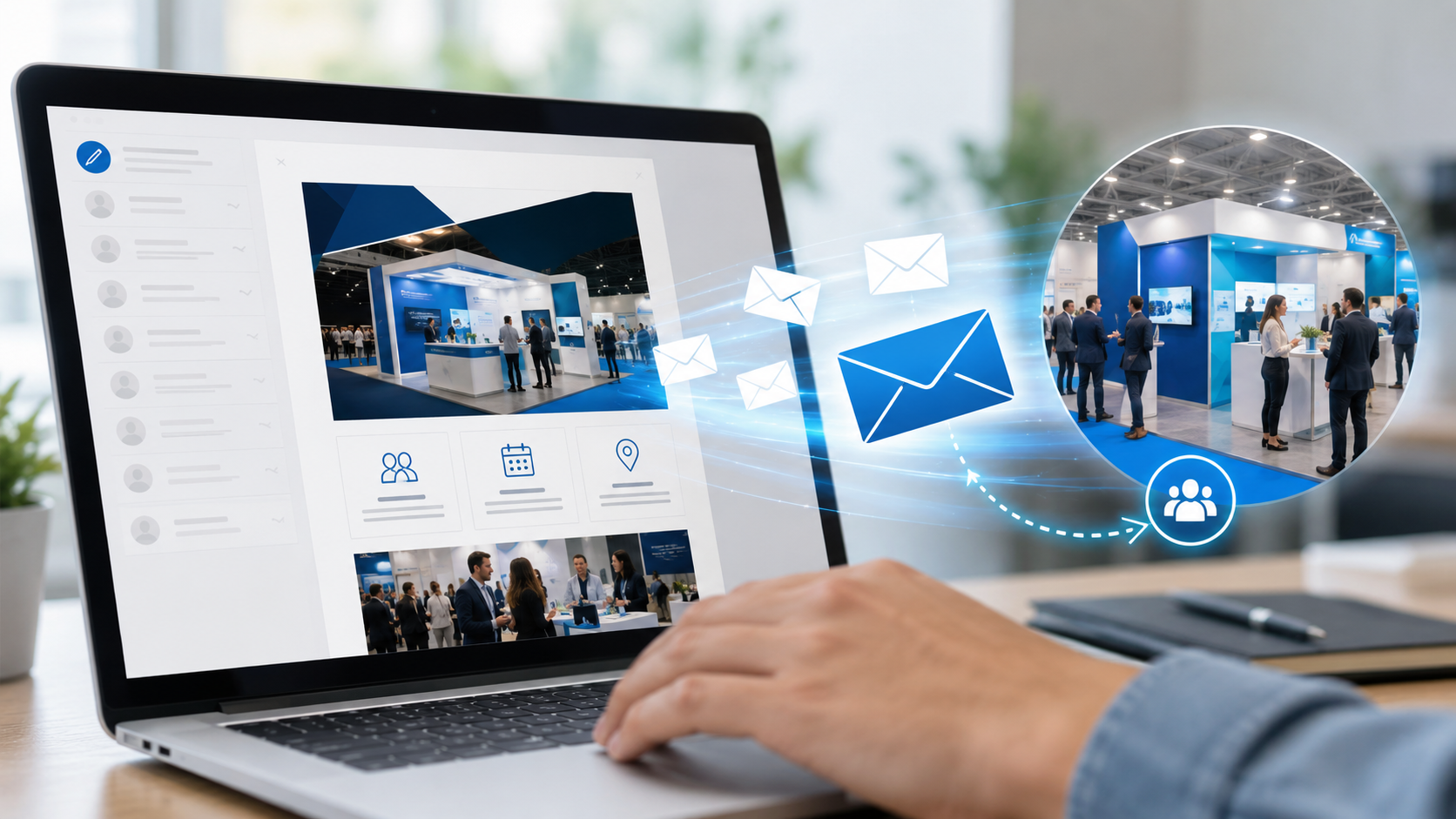
Why Email Marketing Remains the Most Effective Tool for Attracting Visitors to a Trade Show
Participation in a professional trade show begins long before the venue doors open. Although booth design, location, and the quality of the exhibit are important factors, much of the success depends on a company’s ability to attract qualified visitors before the event.
In this context, email marketing campaigns for trade shows remain one of the most effective tools for generating attendance, scheduling meetings, and increasing return on investment. Unlike other channels, email allows companies to communicate directly with customers, distributors, partners, and potential buyers who already have some level of relationship with the business.
Within the Booth Marketing and Promotion cluster, this article explains how to design email marketing campaigns focused on increasing booth visits, improving contact quality, and maximizing the commercial impact of a professional trade show or conference.
Operational Definition: What an Email Marketing Campaign for Trade Shows Is
Email marketing campaign for trade shows (definition): a set of communications sent before, during, and after an event with the goal of attracting visitors to the booth, generating sales meetings, and maintaining contact with attendees.
Its main purpose is not only to announce participation in the trade show. Its real objective is to drive a specific action.
The most common actions are:
- Confirming a visit to the booth.
- Booking a meeting.
- Requesting a demo.
- Downloading pre-event information.
- Attending a presentation.
The most effective campaigns focus on generating interaction before the visitor arrives at the venue.
The Strategic Framework for Event Email Marketing
Every effective campaign can be structured into five main phases:
- Goal definition.
- Audience segmentation.
- Email sequence design.
- Conversion into visits or meetings.
- Post-show follow-up.
This same framework can be applied to small regional trade shows as well as major international events.
Define Goals Before Sending the First Email
One of the most common mistakes is launching campaigns without a specific objective.
Before writing any message, it is recommended to answer:
- Do we want to increase booth visits?
- Are we looking to generate sales meetings?
- Are we launching a new product?
- Do we want to strengthen brand awareness?
- Do we need to attract distributors?
The answer will determine the content, frequency, and calls to action of the campaign.
The Importance of Segmentation for Trade Shows and Conferences
Not all recipients have the same interests or the same level of relationship with the company.
Proper segmentation usually improves open and response rates significantly.
Segmentation by Business Relationship
- Current customers.
- Prospects.
- Distributors.
- Strategic partners.
- Industry press.
Segmentation by Interest
- Specific product.
- Industry sector.
- Geographic location.
- Company size.
The more relevant the message is to the recipient, the higher the chances of interaction.
The Ideal Email Sequence Before a Trade Show
The most effective campaigns are usually structured through a progressive sequence of communications.
Email 1: Participation Announcement
It should be sent six to eight weeks before the event.
Goals:
- Communicate your presence at the trade show.
- Build anticipation.
- Save the date in the recipient’s calendar.
Email 2: Value Proposition
Four to five weeks before the event.
It should clearly explain:
- What the visitor will find.
- What new products or solutions will be presented.
- Why it is worth visiting.
Email 3: Meeting Invitation
Two to three weeks before the event.
This message should include a specific call to action:
- Book a meeting.
- Request a demo.
- Confirm attendance.
Email 4: Final Reminder
During the week before the event.
It should include:
- Exact booth location.
- Map or hall number.
- Relevant schedules.
- Contact details.
How to Write Subject Lines That Increase Open Rates
The subject line determines whether the email will be opened or ignored.
Characteristics of a Strong Subject Line
- Clarity.
- Relevance.
- Brevity.
- Explicit benefit.
Examples:
- Visit us at our booth at [Trade Show Name]
- Book a meeting during [Event]
- Discover our latest solutions at [Trade Show]
- Exclusive invitation for professional visitors
Ambiguous subject lines usually generate weaker results.
How to Increase Booth Visits with Email Marketing
The main goal of the campaign should be to turn interest into action.
Include Relevant Incentives
- Exclusive demos.
- Private presentations.
- Priority access.
- Specialized consultations.
Incentives should provide real value to professional visitors.
Make Meeting Booking Easy
Reducing friction is essential.
Best practices include:
- Integrated calendars.
- Simple forms.
- Automatic confirmations.
The Relationship Between Email Marketing and Booth Design
The campaign and the booth should work as one consistent system.
The visitor should immediately recognize at the trade show what they previously saw in the email.
Elements That Should Match
- Visual identity.
- Main messages.
- Commercial promises.
- Calls to action.
Visual consistency improves recall and trust.
How to Measure the Performance of a Trade Show Campaign
Measurement is essential to optimize future participation.
Key Indicators
- Open rate.
- Click-through rate.
- Meetings booked.
- Booth visits.
- Leads captured.
- Cost per opportunity generated.
These indicators make it possible to evaluate the real impact of the campaign on trade show results.
Common Mistakes in Email Marketing Campaigns for Events
- Sending emails too late.
- Not segmenting audiences.
- Using generic messages.
- Including too much information.
- Lacking clear calls to action.
- Not following up.
Most problems are not related to the tool itself, but to the strategy being used.
How to Integrate Email Marketing, Networking, and Lead Generation
The most profitable campaigns are the ones that connect every stage of the sales process.
An effective methodology consists of:
- Generating interest before the event.
- Capturing interaction during the trade show.
- Following up afterward.
This continuity significantly improves the chances of conversion.
How Full-Expo Helps Maximize Trade Show Promotion Results
The success of an email marketing campaign largely depends on the experience visitors find when they arrive at the booth.
Full-Expo develops projects designed to turn previously generated interest into real business opportunities through:
- Strategic booth design.
- Custom production.
- High-impact signage.
- Meeting-ready spaces.
- Experiences aligned with business goals.
The result is a consistent trade show presence that connects promotion, lead capture, and conversion.
Conclusion: A Trade Show Begins Long Before the Doors Open
Email marketing campaigns for trade shows are one of the most effective tools for increasing booth attendance, improving contact quality, and optimizing return on investment.
Companies that wait to attract visitors only during the event usually compete at a disadvantage against those that prepare the ground weeks in advance.
The combination of segmentation, relevant messages, clear calls to action, and a booth prepared to convert visits into opportunities makes it possible to achieve significantly stronger results.
Working with specialists like Full-Expo helps ensure that the entire experience, from the first email to the final meeting, contributes to generating more business and a stronger brand perception.
Frequently Asked Questions About Email Marketing Campaigns for Trade Shows (FAQs)
It is recommended to start six to eight weeks before the event to build visibility and schedule meetings.
A four-email sequence is usually enough to inform, generate interest, and remind contacts about your participation.
By offering value, making meeting booking easy, and clearly communicating the benefits of visiting.
Open rate, clicks, scheduled meetings, and actual booth visits.
It depends on the goal, although meeting invitations usually generate more qualified opportunities.
By using clear subject lines, proper segmentation, and relevant messages for each audience.
An effective campaign increases attendance from qualified visitors and improves the business opportunities generated during the event.