
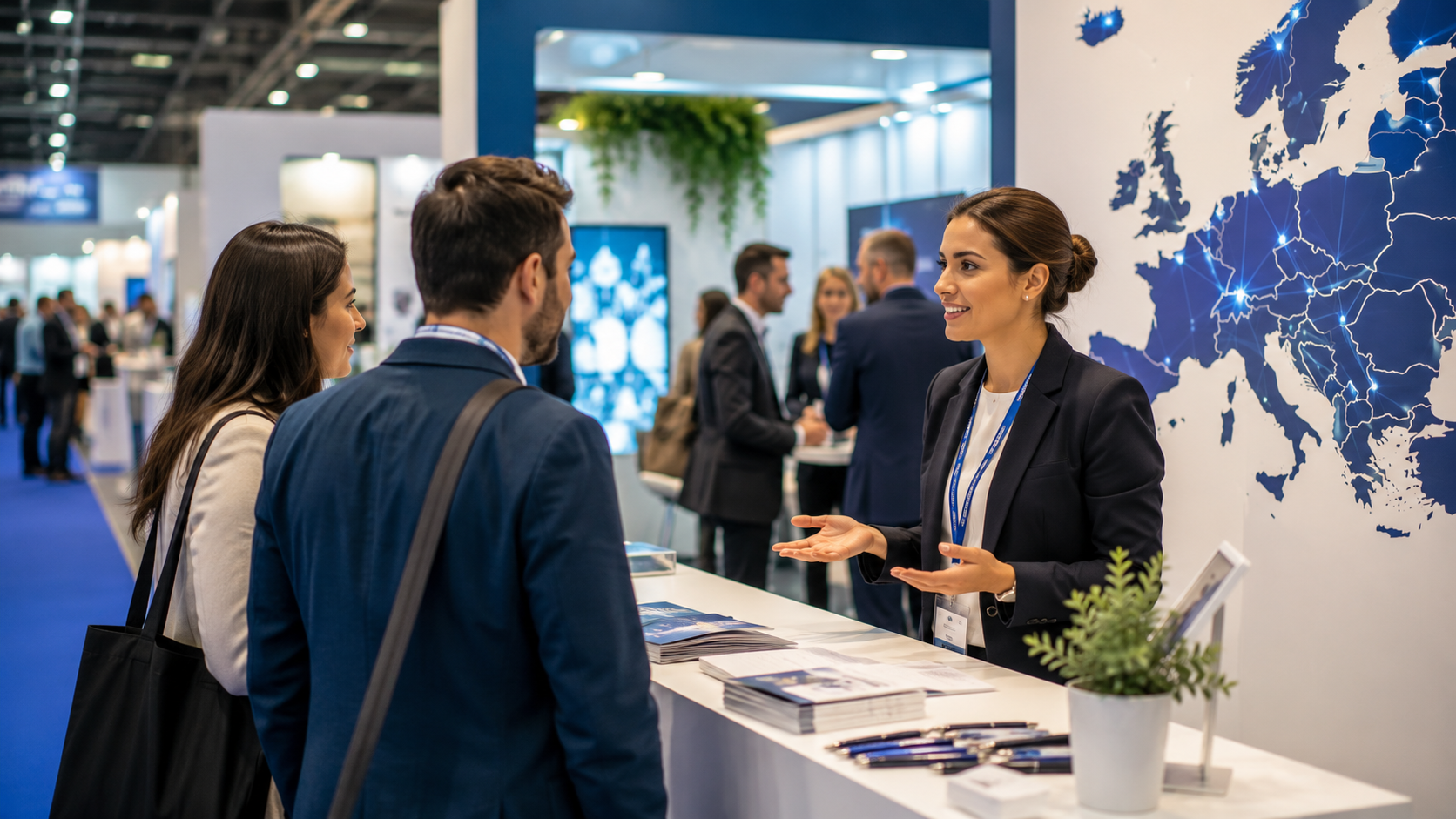
Why Best Practices Make the Difference at a European Trade Show
Participating in a European trade show or conference requires a significant investment in space, design, logistics, staff, and promotion. However, the difference between a profitable exhibition and an experience with limited results rarely depends on budget alone. In most cases, the decisive factor is applying a clear methodology based on best practices for European trade shows and conferences.
Europe hosts some of the world’s most important professional events across industries such as manufacturing, technology, healthcare, food, automotive, construction, and energy. These events bring together thousands of specialized visitors, buyers, distributors, and decision-makers. In such a competitive environment, standing out requires more than having a good product.
The companies that achieve the best results tend to follow a common pattern: they define clear goals, design visitor-centered experiences, optimize booth operations, and measure outcomes. This approach turns trade show participation into a strategic tool for business development and brand positioning.
In this article, we analyze the most effective practices for exhibitors in Europe and how to apply them to maximize visibility, lead generation, and return on investment.
Operational Definition: What Successful Trade Show Participation Means
Successful participation in a professional trade show (definition): participation that achieves predefined objectives through a balanced combination of visibility, lead generation, brand positioning, and business opportunities.
The most common success indicators include:
- Traffic to the booth.
- Number of qualified leads.
- Sales meetings held.
- Quote requests.
- Impact on brand perception.
- Return on investment (ROI).
The goal should not simply be to attend, but to turn participation into measurable results.
The Strategic Framework for Exhibitors at European Trade Shows
Best practices can be organized into five phases that appear in any successful exhibition strategy:
- Planning.
- Booth design.
- Activation during the event.
- Opportunity capture.
- Post-show follow-up.
This same framework can be applied by both small companies and large international organizations.
Planning: The Factor That Most Influences Final Success
Planning begins several months before the trade show. The more preparation there is, the less improvisation is needed during the event.
Define Specific Goals
One of the most common mistakes is exhibiting without specific objectives.
Before booking space or designing the booth, it is worth answering:
- Do we want to generate leads?
- Are we looking for distributors?
- Are we launching a product?
- Do we want to strengthen brand awareness?
Goals shape every decision that follows.
Select the Right Trade Show
Not every trade show is right for every company.
It is recommended to evaluate:
- Visitor profile.
- Presence of buyers.
- Industry relevance.
- Competitors exhibiting.
- International reach.
A trade show aligned with your goals usually generates better results than a larger but less specialized event.
Booth Design: Turning Space into a Sales Tool
The booth is the main point of contact between the company and visitors.
Prioritize Visual Clarity
Visitors make quick decisions. The booth must immediately answer three questions:
- Who you are.
- What you do.
- Why you are relevant.
Clarity usually generates better results than visual complexity.
Make Entry Easy
Open booths usually generate more traffic because they reduce psychological barriers.
Best practices:
- Remove visual obstacles.
- Create wide access points.
- Design intuitive visitor flows.
Include Meeting Areas
In B2B events, conversations are essential.
Meeting areas allow for:
- Greater privacy.
- Longer conversations.
- Better qualification of opportunities.
The Importance of Signage and Wayfinding
Signage is one of the most influential elements in visitor perception.
Characteristics of Effective Signage
- Readable from a distance.
- Simple message.
- Clear visual hierarchy.
- Consistency with brand identity.
Effective signage improves visibility, recall, and understanding.
Common Mistakes
- Too much text.
- Hard-to-read fonts.
- Disorganized information.
- Generic messages.
Preparing the Sales Team
An excellent booth loses effectiveness if the team is not prepared.
Pre-Show Training
Every team member should know:
- Event goals.
- Key messages.
- Featured products.
- Lead capture process.
The Right Attitude
Visitors usually value:
- Availability.
- Active listening.
- Ability to summarize clearly.
- Technical knowledge.
The human experience directly influences brand perception.
How to Attract More Visitors During the Trade Show
Traffic generation should be planned before and during the event.
Pre-Show Actions
- Personalized invitations.
- Email marketing campaigns.
- Social media promotion.
- Meeting scheduling.
Actions During the Trade Show
- Live demos.
- Short presentations.
- Interactive activities.
- Attractive visual materials.
The goal is to give visitors reasons to approach the booth.
Lead Capture and Qualification
A successful trade show is not measured only by the traffic received.
What matters is turning visitors into real opportunities.
Minimum Information to Record
- Name.
- Company.
- Job title.
- Identified need.
- Level of interest.
Recommended Classification
- Hot lead: immediate opportunity.
- Warm lead: medium-term interest.
- Cold lead: future follow-up.
Qualification improves post-show sales effectiveness.
Networking: One of the Most Underused Best Practices
European trade shows offer exceptional networking opportunities.
Where to Generate Contacts
- At the booth.
- At conferences.
- In common areas.
- At side events.
Many strategic collaborations begin outside formal sales meetings.
How to Measure Participation Performance
Measurement is essential to improve future trade show participation.
Key Indicators
- Number of visitors.
- Leads captured.
- Cost per lead.
- Meetings held.
- Post-show sales.
- Return on investment.
Data makes it possible to identify what worked and what should be optimized.
Follow-Up: Where Results Are Really Generated
A large part of the value of a trade show appears after the event.
Follow-Up Best Practices
- Contact leads within the first 72 hours.
- Personalize every communication.
- Reference the context of the conversation.
- Suggest a concrete next step.
Without follow-up, many opportunities are lost.
Comparison Between High-Performance and Low-Performance Exhibitors
- They plan vs. they improvise.
- They measure results vs. they rely on intuition.
- They design experiences vs. they display products.
- They qualify leads vs. they collect contacts.
- They follow up vs. they wait for replies.
The differences are usually methodological rather than budget-based.
How Full-Expo Helps Apply These Best Practices
Full-Expo develops results-driven projects through:
- Strategic booth design.
- Custom production.
- High-impact signage.
- Visitor flow and experience optimization.
- Solutions adapted to European trade shows.
The goal is to turn every booth into a sales tool capable of strengthening the brand, capturing attention, and generating business opportunities.
Conclusion: Success at European Trade Shows Comes from a System
Best practices for European trade shows and conferences are not isolated actions. They are part of a system where planning, design, attraction, interaction, and follow-up work together.
Companies that apply this approach improve contact quality, increase return on investment, and strengthen their market positioning.
In an increasingly competitive environment, simply participating is no longer enough. The key is to participate with a clear strategy and a booth designed to generate results.
Working with a specialized partner like Full-Expo makes it possible to turn that strategy into a strong, professional, growth-oriented trade show presence.
Frequently Asked Questions About European Trade Shows and Conferences (FAQs)
By defining clear goals, planning meetings, designing a strategic booth, and establishing a follow-up plan.
The combination of visibility, clear messaging, visitor experience, and a prepared sales team.
With a clear value proposition, engaging activities, and an effective contact qualification system.
It is essential because it shapes brand perception, booth traffic, and the quality of interactions.
By analyzing traffic, leads, meetings, opportunities generated, and return on investment.
Preferably within the first 72 hours after the event ends.
Because they provide access to buyers, distributors, and decision-makers in highly specialized international markets.