
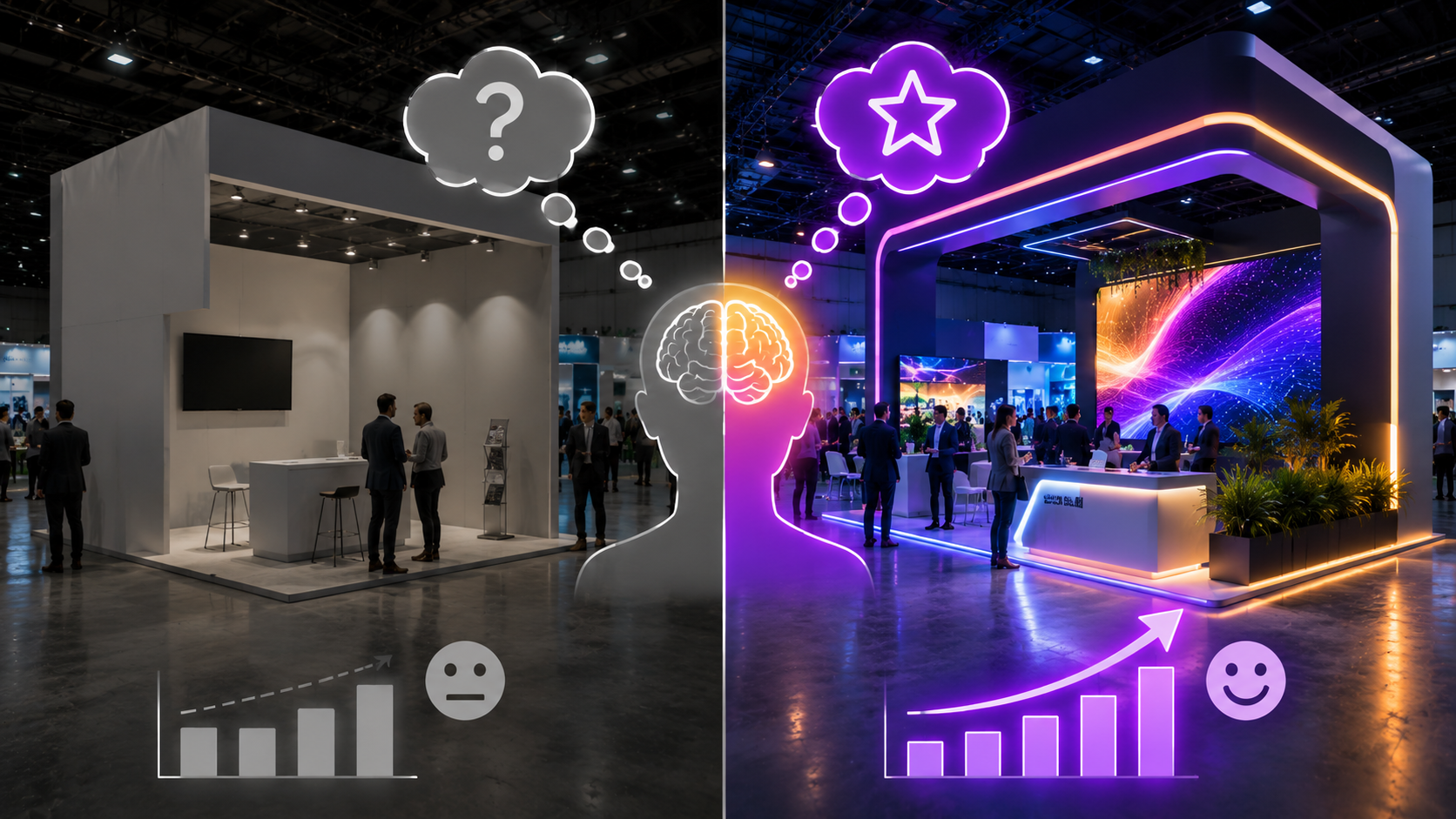
The Booth as a Physical Representation of the Brand
At a professional trade show, visitors do not get to know a company only through its products or services. Perception starts much earlier, the moment they see the booth from an aisle, interpret the visual design, and decide whether to approach or keep walking.
That is why the impact of a booth on the brand is much deeper than many companies realize. The booth acts as a physical representation of corporate identity and directly shapes how the company is perceived in terms of quality, innovation, trust, and professionalism.
Within the Strategic Value cluster, this article analyzes how a booth influences brand building at trade shows and conferences, which elements create a positive perception, and how to turn the exhibit space into a strategic positioning tool.
Operational Definition: What Brand Perception Means at Trade Shows
Brand perception (definition): the set of impressions, associations, and expectations that a visitor builds about a company based on visual, spatial, and experiential cues.
At a trade show, much of that perception is shaped by:
- Booth design.
- Signage and wayfinding.
- Materials and finishes.
- Interaction with the space.
- The visitor experience.
Visitors interpret these elements as indirect signals of the company’s quality and credibility.
The Perception Framework: How a Booth Builds Brand Image
The impact of a booth on the brand can be analyzed through five dimensions:
- Visibility: ability to stand out.
- Consistency: alignment with corporate identity.
- Credibility: perception of professionalism.
- Differentiation: ability to stand apart from competitors.
- Memorability: ease of being remembered.
These five dimensions work together. A booth may be visible, but if it is not consistent or memorable, its strategic impact will be limited.
Visibility: The First Filter of Perception
Perception begins before any interaction. First, the visitor visually detects the booth.
Factors That Increase Visibility
- Dimensional signs.
- Strategic lighting.
- Height and visual volume.
- Clear graphic design.
A visible booth automatically communicates greater presence and relevance inside the exhibition hall.
What Happens When Visibility Is Low
- Lower traffic.
- Lower brand recall.
- Lost interaction opportunities.
The first impression is usually formed in just a few seconds.
Visual Consistency: How Design Reinforces Brand Identity
Consistency is one of the most important factors in building trust.
What Consistency Means in a Booth
- Consistent use of corporate colors.
- Typography aligned with the brand.
- Messages that match the positioning.
- Design adapted to the industry and audience.
When the booth communicates consistency, visitors perceive professionalism and stability.
Common Mistake
Creating visually attractive booths that are disconnected from the company’s real identity.
Credibility: The Psychological Effect of Materials and Finishes
Visitors use visual cues to infer quality.
Elements That Increase Credibility
- Well-executed finishes.
- Professional lighting.
- Visual order.
- Durable, well-integrated materials.
In B2B sectors, the perceived quality of the booth directly influences the perceived quality of the product or service.
Relationship Between Booth and Trust
A poorly executed booth can create doubts before a sales conversation even begins.
Differentiation: Standing Out in Crowded Environments
International trade shows bring together hundreds or thousands of exhibitors. Differentiation is essential.
How Differentiation Is Built
- Distinctive architecture.
- Interactive experiences.
- High-impact signage.
- Strategic use of technology.
Differentiation is not about being “louder,” but about being more recognizable and relevant.
Effective Differentiation vs. Visual Overload
- Effective differentiation: clarity and personality.
- Visual overload: noise and confusion.
An overcrowded booth can hurt perception instead of improving it.
Memorability: How to Make the Brand Remembered
Brand recall is one of the most valuable assets at a trade show.
Factors That Improve Memorability
- Simple message.
- Emotional experience.
- Distinctive visual design.
- Intuitive visitor flows.
Visitors better remember booths that offer clear and consistent experiences.
How Graphic Design Influences Brand Perception
Graphic design is one of the most decisive elements.
Key Aspects
- Readability.
- Visual hierarchy.
- Contrast.
- Visual consistency.
Signage and graphics act as the booth’s visual language.
What Poor Graphic Design Communicates
- Disorganization.
- Lack of clarity.
- Lower professionalism.
How the Visitor Experience Affects Brand Image
Perception does not depend only on visuals. It also depends on how the visitor feels inside the booth.
Elements That Improve Experience
- Easy access.
- Clear pathways.
- Comfortable meeting areas.
- Intuitive interaction.
The spatial experience either reinforces or weakens brand positioning.
Comparison: Strategic Booth vs. Improvised Booth
- Clear message vs. confusing message
- Consistent identity vs. visual mix
- Structured experience vs. chaotic flow
- Premium perception vs. amateur perception
- Brand recall vs. quick forgetfulness
How to Measure the Booth’s Impact on Brand Perception
Relevant Indicators
- Traffic generated.
- Dwell time.
- Quality of interactions.
- Perception surveys.
- Post-show brand recall.
Perception can be evaluated through both quantitative and qualitative data.
Mistakes That Damage Brand Perception at Trade Shows
- Too much visual information.
- Generic design.
- Lack of consistency with corporate identity.
- Low-quality materials.
- Confusing visitor experience.
These mistakes directly affect company credibility.
How Full-Expo Helps Strengthen Brand Perception
Full-Expo develops booths focused on strategic positioning through:
- Custom design.
- High-impact signage.
- Advanced production and premium finishes.
- Consistent visual experiences.
- Integration between branding and functionality.
The goal is not only to create an attractive space, but to build a solid and consistent perception that helps generate trust and business opportunities.
Conclusion: The Booth Is a Strategic Brand-Building Tool
The impact of a booth on the brand is real, measurable, and decisive at trade shows and conferences. Visitors use the exhibit space as a reference to interpret who the company is and what level of quality it can offer.
That is why the booth should not be seen only as an operational support. It is a strategic tool for positioning, differentiation, and trust building.
Companies that understand this relationship are able to stand out, improve perception, and increase business opportunities in highly competitive environments.
Working with specialists like Full-Expo makes it possible to develop booths aligned with brand identity and ready to create real impact at national and international events.
Frequently Asked Questions About the Impact of Booths on Brands (FAQs)
It influences how visitors perceive a company’s professionalism, quality, innovation, and trustworthiness.
Graphic design, signage, materials, lighting, and the visitor experience.
Because it shapes attention, interaction, and brand recall in a highly competitive environment.
Yes, if it is well designed, consistent, and clearly communicates the value proposition.
Visual overload, low-quality finishes, confusing messages, and lack of corporate consistency.
With a strategic booth, clear design, and a consistent visitor experience.
It is key to generating visibility, clarity, and recognition inside the exhibition venue.