- Why is Europe still the world's epicenter?
- What defines an international event relevant to exhibitors
- Main international events in Europe 2026 by sector
- How to organize participation in international events in Europe
- Common errors in international events and how to avoid them
- The role of a partner specializing in European fairs
- Conclusion: Europe as a strategic opportunity in 2026
- Frequently Asked Questions about International Events in Europe (FAQs)
Why is Europe still the world’s epicenter?
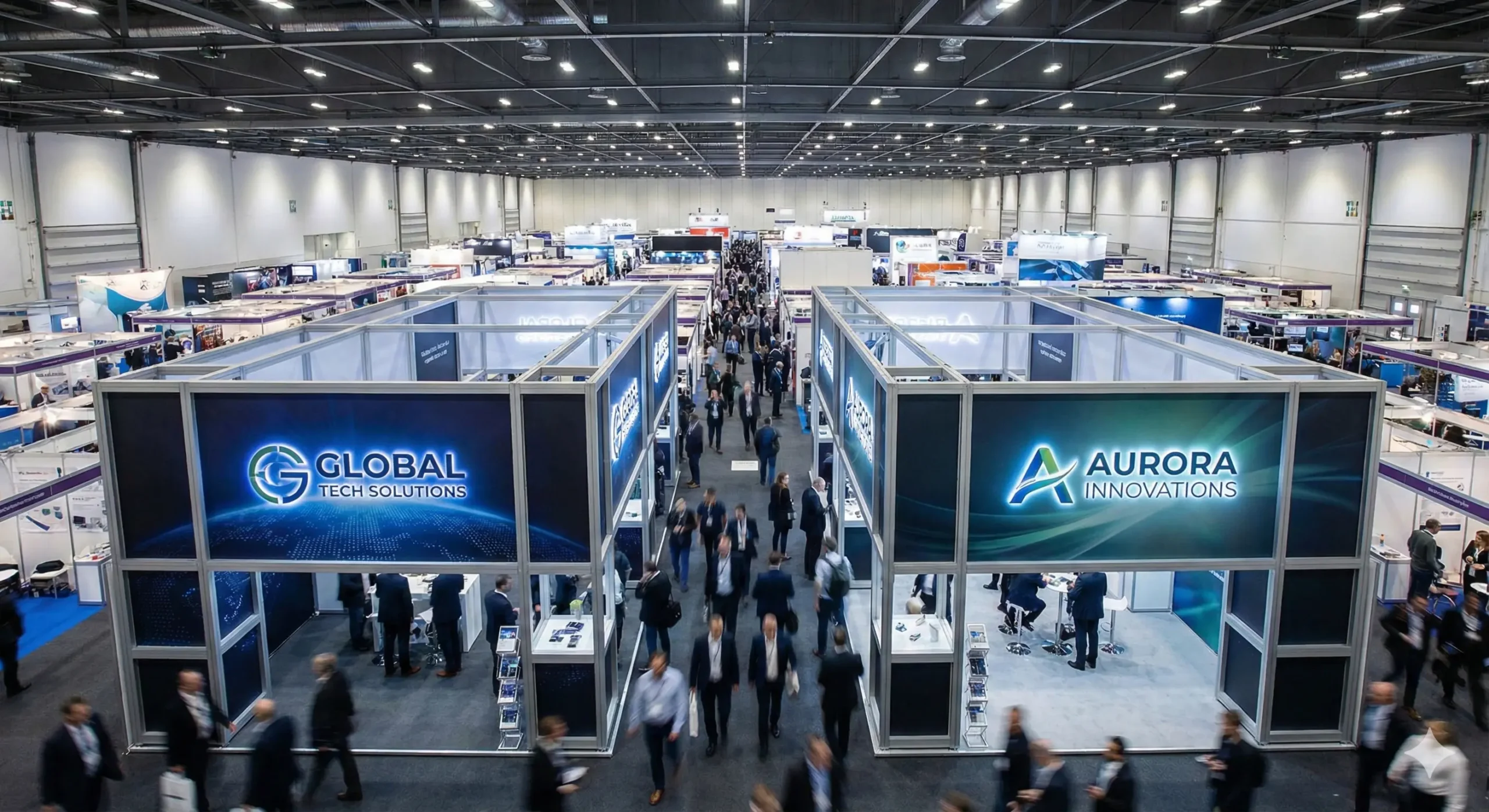
Europe concentrates some of the most relevant international events for exhibitors of everyone. European fairs and congresses bring together buyers, decision makers and prescribers from virtually all industrial, technological and commercial sectors. In 2026, the European holiday calendar maintains this strategic position, with large-scale events acting as true business catalysts.
Participation in the international events in Europe for exhibitors It is not just a timely commercial action, but a strategic investment that requires planning, logistics, design and coordinated implementation. According to data from the European fair industry, more than 70% of international exhibitors consider Europe to be their priority market to generate B2B opportunities, launch products and strengthen brand positioning.
This guide provides a structured view of the major international events in Europe in 2026, along with a clear framework for preparing your participation effectively, minimizing risks and maximizing results.
What defines an international event relevant to exhibitors
Not all events have the same strategic value. A relevant international event is characterized by several objective factors:
- Real international scope: visitors and exhibitors from multiple countries.
- Sectoral specialization: qualified professional public.
- Dimension and continuity: consolidated and recurrent editions.
- Advanced fairground infrastructure: Enclosures prepared for large assembly.
- Business generation capacity: volume of contacts and opportunities.
These criteria make it possible to prioritize events and avoid unprofitable participation.
Main international events in Europe 2026 by sector
The European fair calendar of 2026 is organized by major sectoral areas. Here are some of the most relevant events for international exhibitors.
Technology, innovation and digitization
- Mobile World Congress – Barcelona: global reference in connectivity, telecommunications and digital technology.
- Integrated Systems Europe (ISE) – Barcelona: European trade fair for audiovisual systems and technological integration.
- Viva Technology – Paris: key event of innovation, startups and digital transformation.
These events attract thousands of technological decision-makers and concentrate high-impact launches.
Industry, engineering and manufacturing
- Hanover Messe – Hanover: The world’s largest industrial fair.
- EMO Hanover: international reference in machinery and advanced manufacturing.
- Advanced Factories – Barcelona: automation, industry 4.0 and robotics.
In these environments, the design of the stand and the ability to explain complex processes are decisive.
Health, фарма and biotechnology
- MEDICA – Düsseldorf: world’s leading medical technology fair.
- CPhI Worldwide – Europe: global pharmaceutical industry.
- Arab Health Europe Edition: International meeting point for the health sector.
Strict, corporate image and logistics management are especially critical in this sector.
Retail, consumption and design
- EuroShop – Düsseldorf: retail, commercial design and shopping experiences.
- Maison & Objet – Paris: design, decoration and lifestyle.
- Salone del Mobile – Milan: world reference in interior design.
In these events, the aesthetics of the stand and the experience of the visitor make a difference.
Food and drink
- SIAL – Paris: global food and consumption trends.
- Anuga – Cologne: one of the world’s largest feeding events.
- Seafood Expo Global – Barcelona: fishing and food industry.
The regulations, visitor flows and specific logistics require advance preparation.
How to organize participation in international events in Europe
Successful participation in international fairs is not improvised. It requires a structured process that is repeated on a different scale for each event.
Phase 1: strategic planning
- Define clear objectives: visibility, leads, sales, networking.
- Select events aligned with the target market.
- Allocate global budget and by event.
Companies that plan more than 9 months in advance reduce logistical impacts to a 40%.
Phase 2: stand design and construction
- Design consistent with brand identity.
- Adaptation to the regulations of each European site.
- Choice of reusable solutions for various events.
A well-planned stand allows partial or total reuse at different calendar fairs.
Phase 3: logistics and international coordination
- Inter-country transport management.
- Coordination with organizers and fairgrounds.
- Planning of assembly and disassembly times.
In international events, logistics represents up to the 30% of total budget, so its optimization is key.
Phase 4: execution during the event
- Equipment formed and aligned with the objectives.
- Efficient use of the stand as a commercial tool.
- Monitoring of interactions and contacts.
Phase 5: Post-event analysis
- Assessment of results against targets.
- Analysis of real leads and opportunities.
- Adjustments for future events.
The companies that measure results improve the performance of their successive fairs gradually.
Common errors in international events and how to avoid them
- To underestimate the international logistics: each country has different regulations and times.
- Non-adaptable designs: make reuse difficult.
- Lack of coordination: between design, production and assembly.
- Do not define clear objectives: prevents the measurement of return.
Avoiding these errors improves experience and reduces operational costs.
The role of a partner specializing in European fairs
Managing international events in Europe requires local knowledge, technical experience and coordination capacity. Having a specialized partner allows:
- Reduce risks in assembly and logistics.
- Optimize times and budgets.
- Ensure quality and consistency in all events.
In Full-Expo We accompany the brands throughout the European fair cycle, from planning to final implementation.
Conclusion: Europe as a strategic opportunity in 2026
The international events in Europe for exhibitors In 2026 they offer a unique environment to grow, consolidate markets and position brands globally. The key to success lies in the preparation, coherence and ability to execute accurately.
Planning in advance, choosing the right events and having a specialized partner makes participation in European fairs a cost-effective and sustainable long-term investment.
Frequently Asked Questions about International Events in Europe (FAQs)
MWC, Hanover Messe, MEDICA, SIAL and ISE stand out for their scope and business capacity.
Between 9 and 12 months earlier is the recommended time frame for optimal planning.
Yes, with a well-thought-out design you can reuse the structure and adapt the graph.
It includes space, stand design, logistics, staff and premises services.
High concentration of sectoral events, advanced infrastructure and qualified public.