
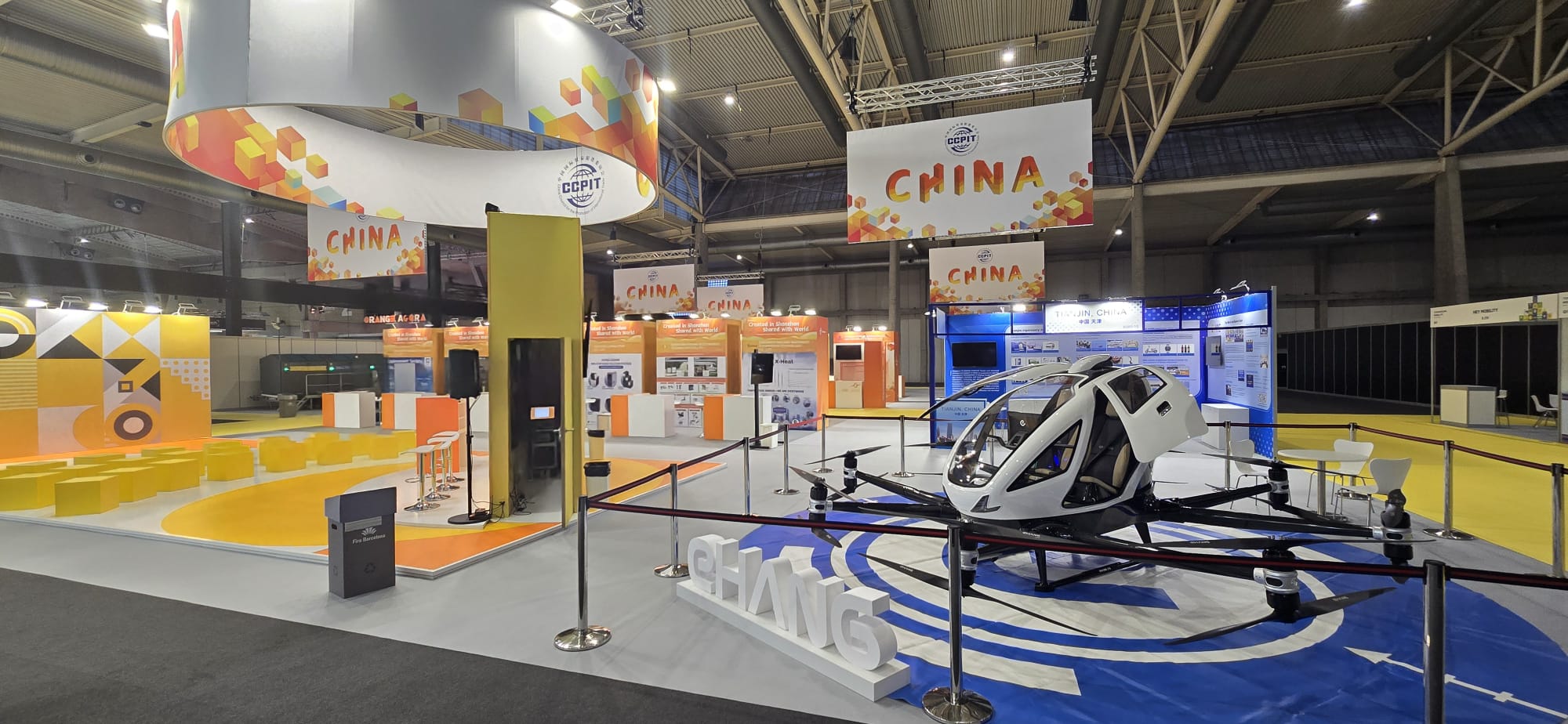
Signage as a Decisive Factor in Booth Performance
At trade shows and conferences, the difference between a booth that attracts business and one that goes unnoticed rarely comes down to budget or structural design alone. The most decisive factor is usually trade show booth signage: the visual system that communicates who you are, what you do, and why you matter.
In an environment where attendees walk past dozens or even hundreds of exhibitors in just a few hours, attention is limited and decision time is minimal. In that context, signage works as a filter: it determines who stops, who understands the offer, and who starts a conversation.
This article develops the Trade Show and Event Signage cluster from a practical perspective. The goal is to understand how to design signage that is not only visually appealing, but also functions as a tool for attracting, qualifying, and converting visitors inside the booth.
Operational Definition: What Trade Show Booth Signage Is
Trade show booth signage (definition): the set of graphic, typographic, and structural elements that communicate identity, value proposition, and visitor flow within a booth, with the goal of generating commercial interaction.
Main function: turn traffic into attention, attention into understanding, and understanding into action.
Connection to results: effective signage improves three key trade show performance indicators:
- Visibility: the ability to be seen from a distance.
- Understanding: message clarity in just a few seconds.
- Conversion: the ability to generate interaction and leads.
The Impact Framework: How Signage Works in a Booth
To design effective signage, it helps to understand how it works as a system. This framework applies throughout the article and repeats at every level: design, materials, and execution.
- Attraction: capture attention in a crowded environment.
- Interpretation: communicate the message without ambiguity.
- Direction: guide the visitor toward an action.
- Reinforcement: strengthen trust through proof and consistency.
When signage fails, it usually breaks down at one of these points. For example, it may be visible but not understandable, or understandable but without a clear direction toward action.
Attraction: How to Stand Out Among Dozens of Booths
The first function of signage is to stop the visitor. Without attention, there is no interaction. To achieve that, you need to work on visibility and contrast.
Technical Visibility Criteria
- Message size: it must be readable from several feet away.
- Contrast: colors should support fast reading under changing lighting conditions.
- Height: elevated or suspended elements improve visual reach.
- Simplicity: fewer elements, more impact.
In exhibition halls with a high density of exhibitors, visual overload reduces the effectiveness of complex messages. That is why clarity beats quantity.
Common Mistakes at This Stage
- Using long texts that must be read from a distance.
- Low-contrast color combinations.
- Visual elements without hierarchy.
Interpretation: How to Make the Message Clear in Seconds
Once you have captured attention, signage must quickly explain what the company does. This point is critical because it determines whether the visitor decides to approach or keep walking.
The 3-Level Messaging Rule
- Level 1: brand + category (what you do).
- Level 2: main benefits.
- Level 3: proof (case studies, metrics, or demo).
This structure allows different visitor profiles to absorb information depending on how much time they spend at the booth.
Applied Example
- Level 1: “Industrial software for predictive maintenance.”
- Level 2: “Reduce downtime and operating costs.”
- Level 3: “Case studies in automotive and energy.”
The message is clear, progressive, and utility-driven.
Direction: How to Guide the Visitor Through the Booth
Signage does not only communicate. It also organizes the space. Well-designed wayfinding turns the booth into a logical journey.
Key Directional Elements
- Defined zones: demo, meetings, reception.
- Calls to action: “Request a demo,” “Talk to a specialist.”
- Visual flow: an order that guides the eye and movement.
A visitor should never have to wonder what to do. Signage should make it intuitive.
Impact on Results
- Higher number of interactions.
- Less friction in the sales process.
- Better use of booth traffic.
Reinforcement: How to Build Trust Through Signage
Trust is a decisive factor at trade shows. Signage can reinforce it through visible credibility signals.
Types of Proof That Work
- Success stories: recognizable companies or industries.
- Certifications: standards or compliance credentials.
- Specific data: measurable results.
The key is to avoid generic claims. Signage should provide evidence, not just promises.
Types of Trade Show Booth Signage and Their Impact
Printed Vinyl
- Advantage: versatility and cost efficiency.
- Use: large surfaces and direct messaging.
Fabric Graphics
- Advantage: clean finish and low glare.
- Use: backdrops and modular structures.
Dimensional Signage
- Advantage: high visual impact.
- Use: logos and branded elements.
Backlit Signage
- Advantage: maximum visibility.
- Use: key booth areas.
Functional Wayfinding
- Advantage: improves the visitor journey.
- Use: internal booth organization.
Practical Checklist: How to Evaluate Your Signage Before Production
- Is it understandable in 3 seconds?
- Does it have one clear main message?
- Does it guide the visitor toward an action?
- Does it include proof or credibility?
- Is it consistent with the brand?
Mistakes That Reduce Signage Impact
- Too much information: reduces clarity.
- Lack of hierarchy: the visitor does not know where to look.
- Design without purpose: aesthetics without function.
- Not adapting the message to the audience: lowers relevance.
Conclusion: Signage as a Strategic System Within the Booth
Trade show booth signage is not a secondary element. It is the system that turns a physical space into a communication and lead-generation tool.
When it is well designed, it helps the booth stand out, explain, guide, and persuade in just a few seconds. When it fails, the booth loses effectiveness regardless of its size or budget.
Within the context of Trade Show and Event Signage, the competitive advantage does not come from doing more, but from doing it better: fewer messages, clearer messages, better structure, and stronger action orientation.
Frequently Asked Questions About Trade Show Booth Signage
It should include the brand, category, main benefit, call to action, and proof elements such as case studies or certifications.
It depends on the use. Vinyl is versatile, fabric offers a cleaner visual finish, and dimensional signage delivers stronger impact.
Use a clear message, strong visual contrast, information hierarchy, and a visible call to action.
Only the minimum needed to understand the offer in seconds. Too much text reduces readability and attention.
Colors with strong contrast against the environment. The key is readability, not isolated aesthetics.
By tracking stops, interactions, and leads generated. If interaction does not increase, the message needs to be revised.
Lighting can improve visibility, especially in large exhibition halls, as long as it reinforces readability rather than becoming a distraction.