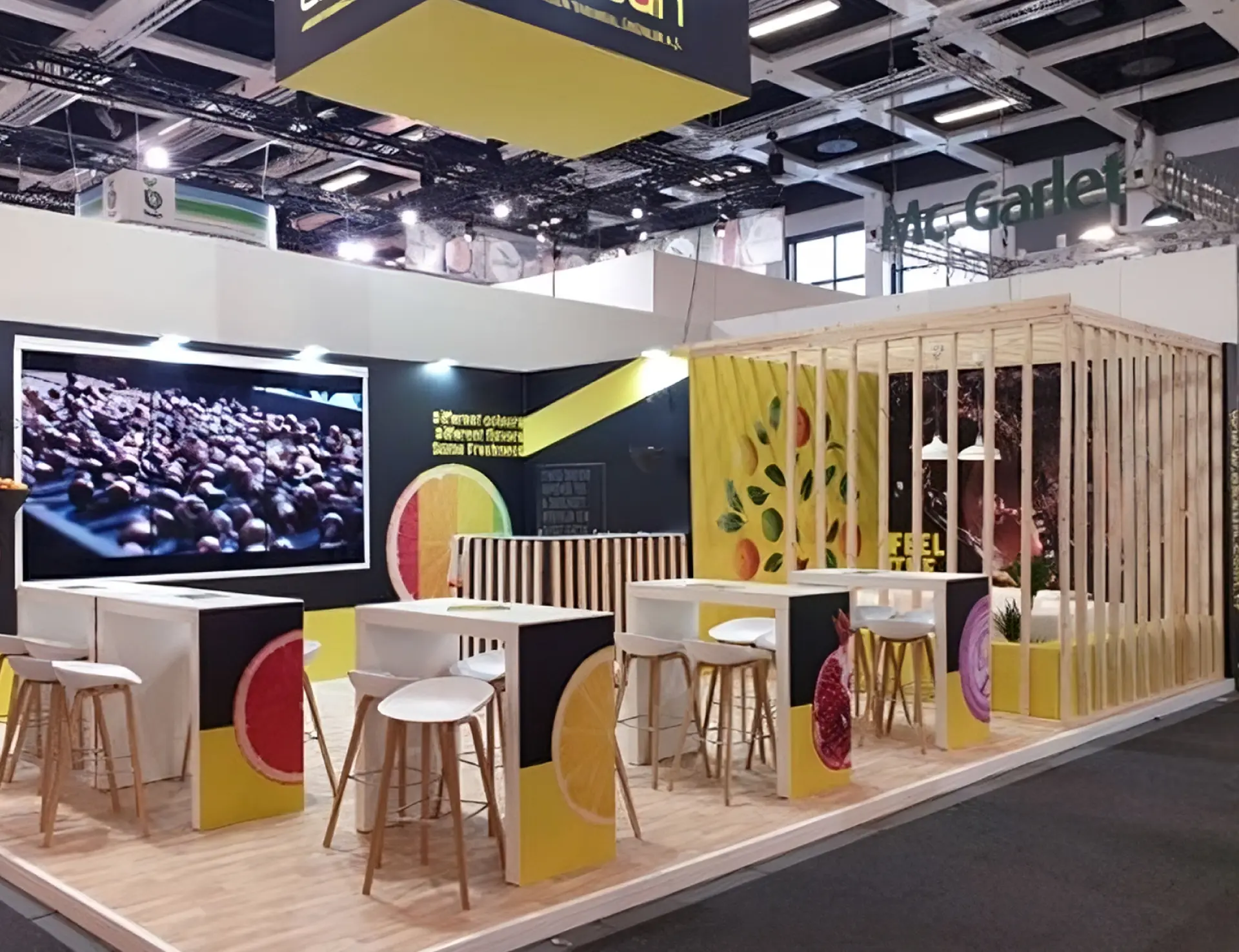
The design of stands for fairs and congresses It is constantly evolving, influenced by technological advances, sustainability and new ways of attracting public attention. In this article, we will explore the main trends in stand design they are making a difference in events around the world. Find out how to implement them in your next project to highlight and maximize the impact of your brand.
Minimalist design: Less is more
Minimalism remains one of the strongest trends in the design of stands. With clean lines, neutral colors and carefully selected visual elements, minimalist stands allow the products and messages of the brand to be the protagonists.
- Neutral colours: White, grey and natural wood tones transmit elegance and clarity.
- Open spaces: They allow for better circulation and interaction with visitors.
- Subtle lighting: Indirect light highlights key details without distracting the public.
Technological integration: Innovation at the service of design
Technology has become a key tool for attracting visitors and offering memorable experiences. Integrate technological elements in the design of the stand can improve interaction and attract public attention.
- Interactive panels: They show dynamic content such as videos, catalogues or custom presentations.
- Increased and virtual reality: They create immersive experiences that connect emotionally with the attendees.
- Beacons and analytics: They collect data on visitor behaviour to improve future strategies.
Sustainability in the design of stands
Sustainability is not only a trend, but a necessity. The stands ecosustainable not only reduce the environmental impact, but also project a positive and responsible image of the brand.
- Recycled materials: From certified wood to recyclable plastics, sustainable materials are gaining ground.
- Reusable structures: Modular designs that can be adapted to different events.
- LED lighting: It reduces energy consumption and offers an attractive visual effect.
Modular and multifunctional designs
The modular designs enable companies to adapt their stand to different sizes and event settings. In addition, the multifunctional stands integrate areas for meetings, exhibitions and demonstrations in the same space, maximizing their usefulness.
Immersive experiences and storytelling
The storytelling applied to the design of stands is an upward trend. Through graphics, audiovisual content and interactive elements, brands can tell stories that connect with the emotions of the public and strengthen their main message.
- Impressive graphics: Incorporate large images and clear messages that highlight the value proposal.
- Thematic areas: Design areas that tell a history consistent with the identity of the brand.
- Interaction with visitors: Games, contests and activities to create positive memories.
Colors and textures in trend
The living colors and innovative textures are marking the pattern in the stands of fairs. Incorporating these elements creates a visual impact that attracts attention from afar.
- Colors in contrast: Bold combinations that stand out in the exhibition environment.
- Natural texts: Wood, stone and fabrics that provide warmth and authenticity.
- Bright finishes: Metal surfaces or with mirror effect for a modern touch.
Frequently asked questions about stand design
The ideal is to start at least 3 to 6 months before the event, depending on the complexity of the design and the technological elements you want to include.
The budget varies according to the technological elements. For example, an interactive screen may cost between €1,000 and €5,000, while virtual reality may require larger investments.
Yes, modular designs allow you to reuse structures and adapt them to different spaces, reducing costs and being more sustainable.
The key is an impact visual design, effective storytelling and technological elements that attract attention and generate interaction with visitors.
Recycled materials such as aluminium, PET plastics and certified wood are excellent options for sustainable and durable design.