The New Standard in Custom Booths
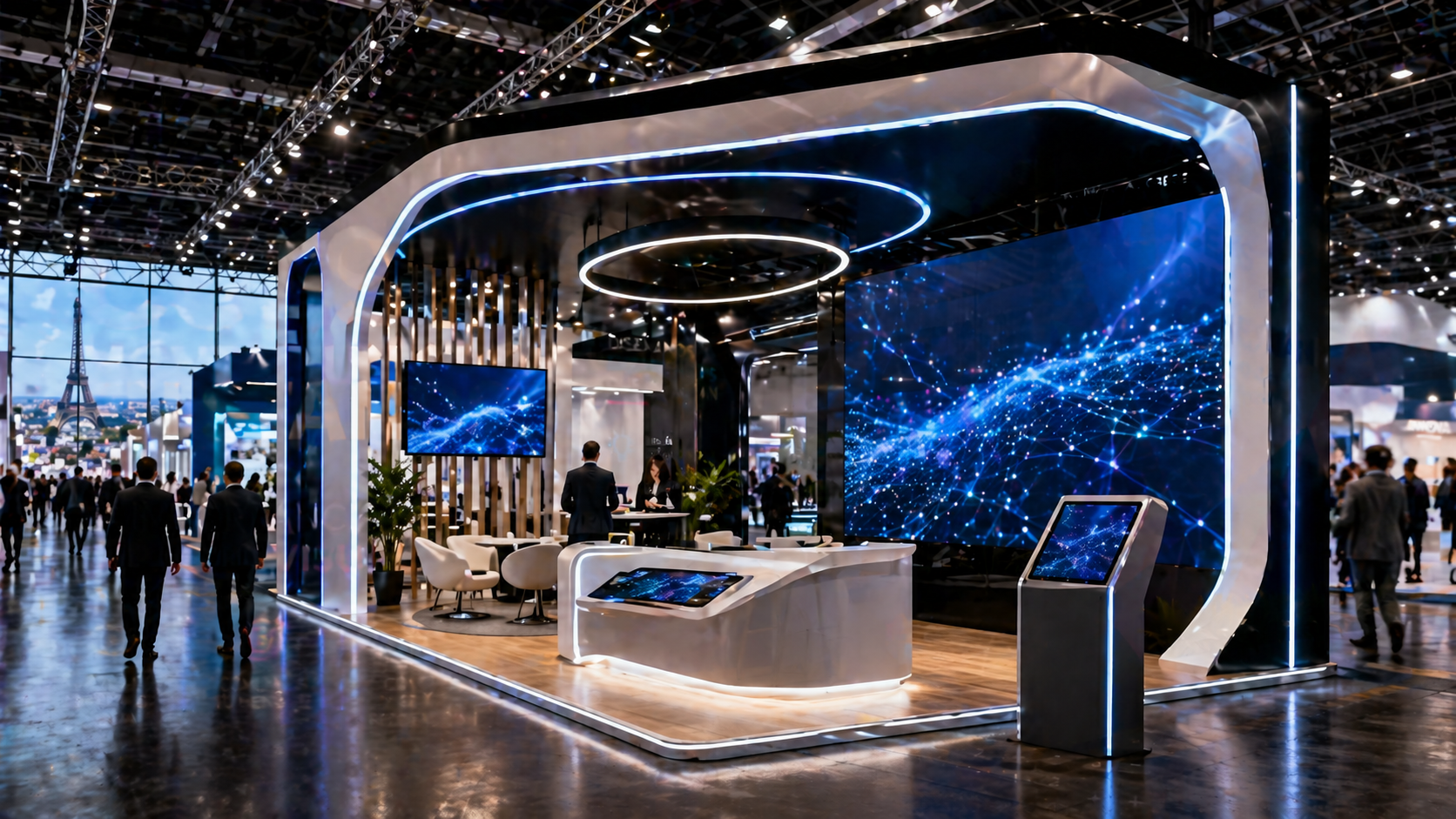
The concept of custom trade show booths with cutting-edge technology has evolved in Europe into a model where design, fabrication, and visitor experience are fully integrated. It is no longer just about building an attractive space, but about developing a technical and commercial system capable of generating measurable results.
Within the Booth Technology and Manufacturing cluster, next-generation custom booths combine three key factors: technical precision, applied innovation, and operational efficiency. This integration makes it possible to create structures that not only stand out visually, but also optimize lead generation, visitor experience, and booth reusability.
Companies like Full-Expo apply this approach through advanced digital design processes, automated manufacturing, and quality control systems tailored to the demands of European trade shows with intense visual and commercial competition.
Operational Definition: What a Custom Booth with Cutting-Edge Technology Is
Custom booth with cutting-edge technology (definition): a custom-designed exhibit space created using advanced digital tools (CAD, CAM, 3D visualization) and manufactured through automated processes that ensure precision, efficiency, and quality in every component.
Difference compared to a conventional booth:
- Full integration between design and production.
- Greater control over materials and tolerances.
- Ability to simulate the project before fabrication.
- Optimized logistics and installation.
The result is a booth that is more reliable, more scalable, and better suited for multiple events.
The Technology Framework: How an Advanced Booth Is Built
To understand the value of these booths, it is necessary to analyze the complete system. A booth with advanced technology is developed across four interconnected layers:
- Digital design: precise modeling of the booth and its components.
- Automated manufacturing: CNC machining and CAM processes.
- Technology integration: lighting, screens, and interactive systems.
- Optimized installation: fast, error-free assembly.
This same framework is repeated in every phase of the project, from the initial concept to on-site execution at the trade show.
Digital Design: The Foundation of Precision and Customization
Design is the starting point. In custom booths with cutting-edge technology, design is developed through CAD tools and advanced 3D visualization.
What Digital Design Contributes
- Realistic visualization: makes it possible to validate the concept before manufacturing.
- Technical precision: every part is defined with exact dimensions.
- Change control: modifications are integrated without losing consistency.
This reduces errors in later stages and improves communication between the client, the design team, and production.
Advanced Manufacturing: From Design to Reality
Manufacturing is where technology makes the biggest difference. CAD/CAM processes make it possible to turn designs into real parts with a high level of precision.
Key Advantages
- Accuracy: parts fit together without manual adjustments.
- Repeatability: consistent production across multiple events.
- Material optimization: less waste thanks to techniques such as nesting.
In an environment where deadlines are tight, this precision reduces issues and improves overall project reliability.
Technology Integration: Visitor Experience and Lead Capture
A modern booth is not just built—it is also programmed. Technology integration makes it possible to improve how visitors interact with the space.
Common Elements
- Interactive screens: for presenting products and services.
- LED lighting: improves visibility and brand perception.
- Lead capture systems: visitor registration through QR codes or digital devices.
The goal is not to add technology for aesthetic reasons, but to use it to facilitate interaction and improve conversion.
Optimized Installation: Efficiency at the Venue
Installation is a critical stage at European trade shows. A well-designed booth reduces setup time and operating costs.
Indicators of Efficient Installation
- Less installation time.
- Fewer assembly errors.
- Greater structural safety.
This is possible thanks to prior CAD planning and precision manufacturing.
Strategic Benefits of Advanced Custom Booths
1) Greater Visual Impact
Custom design makes it possible to stand out in crowded environments, increasing booth visibility.
2) Better Lead Generation
The integration of signage, technology, and visitor flow makes it easier to engage attendees.
3) Long-Term Cost Optimization
Modularity and reusability reduce total cost across multiple events.
4) Brand Consistency
Full design control ensures consistency across every booth element.
Comparison: Traditional Booth vs. Technology-Driven Booth
- Design: basic vs. advanced digital design
- Manufacturing: manual vs. automated
- Precision: variable vs. controlled
- Installation: dependent vs. optimized
- Results: uncertain vs. measurable
How to Choose a Custom Booth with Cutting-Edge Technology
Key Criteria
- Business objective: leads, branding, or both.
- Event frequency: level of reuse required.
- Type of trade show: size, competition, and audience.
- Budget: upfront investment and expected return.
Recommended Process
- Define clear goals.
- Design a concept aligned with the brand.
- Validate the design in 3D.
- Optimize production with CAD/CAM.
- Plan installation and logistics.
Application Example: How Full-Expo Develops Advanced Booths
A typical project follows this workflow:
- Concept design tailored to the client.
- Detailed digital modeling.
- Manufacturing through automated processes.
- Quality control in the workshop.
- Efficient on-site installation.
This approach reduces errors and improves the final result.
Common Mistakes When Implementing Technology in Booths
- Using technology without a clear objective: reduces effectiveness.
- Lack of integration: disconnected elements weaken the result.
- Unnecessary cost overruns: no clear return on investment.
- Excessive complexity: makes installation more difficult.
Conclusion: Technology as a Real Competitive Advantage
Custom trade show booths with cutting-edge technology represent today’s standard at European trade shows. It is not about adding innovation because it is trendy, but about using it to improve real business results.
A booth that is well designed and manufactured with advanced technology is more precise, more efficient, and more cost-effective. It helps you stand out, capture attention, and turn booth traffic into business opportunities.
If your company exhibits at trade shows and events, the next logical step is to work with a system that combines design, manufacturing, and technology. That is the foundation for competing with a real advantage.
Request your quote now and discover how a custom booth can transform your trade show presence.
Frequently Asked Questions About Custom Booths with Technology
It is a booth designed and manufactured with advanced digital tools that improve precision, efficiency, and business performance.
Greater precision, stronger design, fewer installation errors, and better lead generation results.
It depends on size and complexity, but it often improves long-term cost efficiency thanks to reusability.
CAD design, CAM manufacturing, LED lighting, interactive screens, and lead capture systems.
Yes, especially when it is designed with a modular structure.
The provider should offer integrated design, manufacturing, and installation, along with experience in international trade shows.
It depends on the project, but advanced processes make it possible to reduce both production and installation time.