- Technology as a means, not an end
- General framework: principles for integrating technology without saturation
- Define the target before choosing the technology
- Visual Hierarchy and Stimulation Control
- Space integration of screens and devices
- Optimized digital content for the fair environment
- Interaction yes, friction no
- Technology at the service of human equipment
- Sustainability and technological efficiency
- Integrating technology is designing decisions
- FAQs
Technology as a means, not an end
Technology has become a common element in the stands of fairs and congresses. LED panels, interactive tablets, video owalls or digital solutions are part of the current exhibition language. However, integrating technology without a clear strategy can have the opposite effect: visual saturation, message confusion and loss of impact.
This article explains how to integrate screens and technology into the stand in a balanced, effective and aligned manner with the brand objectives. It is not about adding more devices, but about design useful experiences that improve understanding, increase interaction and strengthen the visitor’s memory.
According to data from the European fair sector, the standards that integrate technology in a planned way increase the average time of stay of the visitor between a 35% and 50%while those who use it without criteria reduce effective care in less than 30 seconds. The difference is in the approach.
General framework: principles for integrating technology without saturation
Before talking about specific devices, it is necessary to establish a conceptual framework. The integration of technology into stands must meet four basic principles:
- Functionality: the technology must serve a clear purpose.
- Visual Hierarchy: not all elements should be highlighted at the same level.
- Space coherence: technology and architecture must dialogue.
- Operational simplicity: the visitor must understand how to interact without explanation.
These principles are applied recursively in each decision: from the choice of a screen to the provision of the digital content.
Define the target before choosing the technology
The first usual error is to start with the device. The right approach is the reverse: define the target and then select the right technology.
Common goals in stands with technology
- Explain a complex product or service.
- Show processes, data or results.
- Generate interaction and capture of leads.
- Strengthen innovative brand image.
- Support the commercial team.
Each target involves a different type of technology. For example, a LED screen is effective in capturing distance attention, while a tablet is more suitable for individual interaction and data collection.
Visual Hierarchy and Stimulation Control
One of the factors that contribute most to saturation is the lack of hierarchy. When everything moves, everything emits light and everything demands attention, the visitor disconnects.
Technology hierarchy rule
- A leading technological element by area.
- Secondary elements with static or low frequency content.
- Visual rest spaces without digital stimuli.
Behaviour studies at European fairs indicate that the a single main stimulus source get up to 40% more message retention than those with multiple screens competing with each other.
Space integration of screens and devices
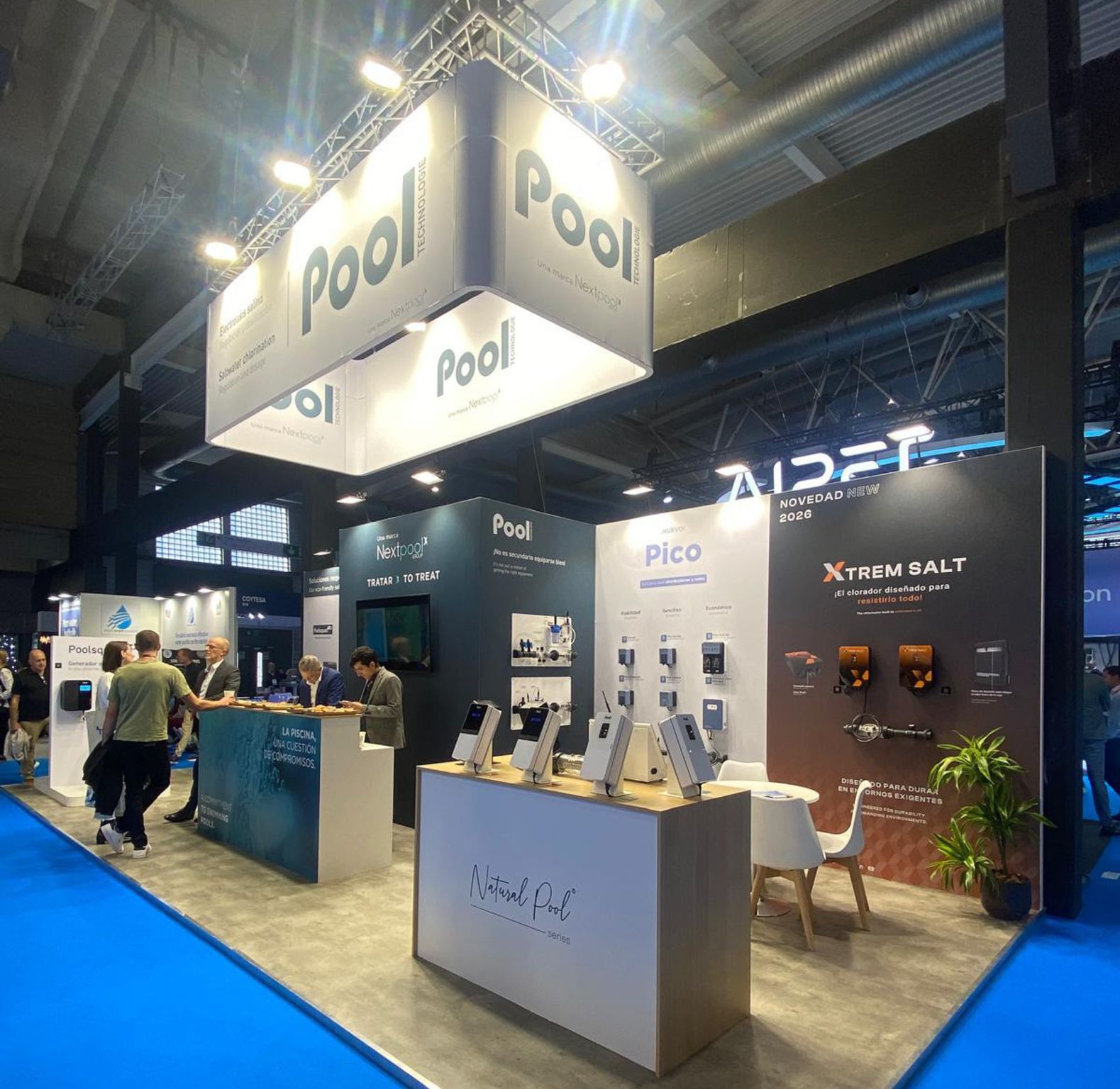
Technology should not be “placed” on the stand, should be part of its construction. This involves integrating it into walls, furniture or tours, avoiding improvised solutions.
Good physical integration practices
- Plates integrated into walls, not on visible supports.
- Incorporated or integrated boards in counters.
- LEDs used as an architectural surface, not as an added.
- Hidden cabling and no technical elements in sight.
Quality perception increases when the technology seems “native” to the stand. In well-integrated projects, the visitor’s assessment of space improves up to a 25%, according to post-event surveys of the MICE sector.
Optimized digital content for the fair environment
Technology does not bring value if the content is not designed for fair. The environment is noisy, time is limited and attention is fragmented.
Criteria for effective content on stand screens
- Comprehensible messages in less than 5 seconds.
- Short texts and remote-readable typographs.
- Slow and controlled animation.
- Colors consistent with visual identity.
- Avoid long videos without context.
A report from Event Marketing Institute shows that the 70% of visitors do not interact with digital content that exceeds 30 seconds If there is no clear call to action.
Interaction yes, friction no
Interaction is one of the great values of the technology in stands, but it must be immediate and barrier-free.
Principles of effective interaction
- A main action per device.
- Input instructions, not explanatory texts.
- Visual feedback immediately.
- Possibility of abandoning interaction at any time.
Tablets used for digital catalogues or contact forms work best when the complete process does not exceed 60 seconds. More time reduces the completion rate.
Technology at the service of human equipment
A frequent error is to design stands where technology replaces staff. In fact, it must enhance its work.
How to support the commercial team with technology
- Panels that strengthen the seller’s speech.
- Tablets to support quick meetings.
- Visualization of data that facilitate conversation.
At B2B fairs, the stands that combine technology and human contact generate a 35% more qualified lead that the fully automated spaces.
Sustainability and technological efficiency
Integrating technology also involves responsibility. The efficient use of devices reduces energy consumption, costs and logistical complexity.
- Low-consumption LED panels.
- Centralized content management.
- Reusable equipment in several events.
- Automatic off-schedule.
The brands that optimise the technological use at fairs reduce their energy consumption to a 20% by event, according to data from the European exhibition sector.
Integrating technology is designing decisions
Integrating technology into a stand is not about adding devices, but about make conscious decisions. Each screen, tablet and LED must respond to a target, take a clear place in the visual hierarchy and bring real value to the visitor.
When technology is integrated from design, it becomes a powerful ally: it improves experience, strengthens brand and optimizes commercial results without saturating space.
In Full-Expo We design stands where technology is part of architecture, message and experience, helping brands communicate better, not more.
FAQs
It depends on size, but as a general rule a main screen per functional area is sufficient to avoid saturation.
High-gloss LED screens are the most effective for fertile environments because of their visibility and low consumption.
Tablets work best for individual interaction; large touch screens are useful for group demonstrations.
By defining a clear objective per device and limiting the content to a main action.
Yeah, when it’s integrated with strategy. It improves the time of stay, brand memory and the capture of leads.