
- The Framework That Will Define Booths in 2026
- What’s Changing in Europe: Real Pressures That Shape the Booth
- What Trade Show Booths in Europe Will Look Like in 2026: 6 Trends That Actually Change the Project
- 1) From “One-and-Done Booths” to Circular, Measurable Booth Systems
- 2) Advanced Modularity: The Booth as a “System,” Not a One-Off Build
- 3) Traceability and Component “Passports”: Audit-Ready Documentation
- 4) Efficient Lighting and High-Contrast Signage: Visibility Without “Noise”
- 5) Useful Tech: Less “Gadget,” More Intent Capture
- 6) Logistics and Installation as a Competitive Advantage: Speed, Safety, and Cost Control
- 2026 European Trade Show Prep Guide: A 5-Phase Method
- Common Mistakes in 2026 Booths (and How to Avoid Them)
- Conclusion: How to Turn 2026 Trends into One Coherent Decision
- FAQs About European Trade Show Booths in 2026
The Framework That Will Define Booths in 2026
In 2026, a booth at a European trade show is no longer judged only by “how it looks.” It’s evaluated as a complete system: compliance, efficiency, visitor experience, and the ability to measure results. This shift isn’t theoretical—it’s driven by sustainability and traceability demands across the value chain, rising logistics costs, and fierce competition for seconds of attention in increasingly crowded exhibition halls.
To build a winning European trade shows 2026 booths strategy, it helps to use a stable framework you can apply to any show, country, and space format. In this article, we’ll work through the 2026 Trends cluster with an operational lens: what will change, why it’s changing, and how to translate it into design and production decisions.
Working framework (applies throughout this article): a 2026 booth is built by balancing four variables: circularity (materials and reuse), compliance (requirements and reporting), experience (clarity and flow), and measurement (interaction data and ROI). Each section repeats this framework at a different scale—first as strategy, then as design, then as executable detail.
What’s Changing in Europe: Real Pressures That Shape the Booth
The only “trends” that matter are the ones that change purchasing decisions and project requirements. In 2026, the booth becomes a visible extension of internal sustainability policies and operational efficiency goals. Two forces are especially relevant:
- Reporting and traceability: more European companies must report sustainability using shared standards (ESRS). That pushes stakeholders to request data on materials, reuse, and waste—trade shows included.
- Circular economy applied to events: EU policy increasingly prioritizes reduction, reuse, and recycling across categories, and that logic carries into design, packaging, transport, and installation choices.
In addition, the exhibition sector continues to recover and is projecting growth, which increases both visual and commercial competition inside halls: more active exhibitors means a higher need to stand out with clarity and effectiveness.
What Trade Show Booths in Europe Will Look Like in 2026: 6 Trends That Actually Change the Project
1) From “One-and-Done Booths” to Circular, Measurable Booth Systems
The leading 2026 trend isn’t a visual style—it’s a project standard. Booths are evolving toward circular solutions defined by three verifiable criteria: reusability, repairability, and materials traceability. This shift is driven by cost pressure, procurement requirements, and regulatory frameworks that favor circularity across the economy.
What “circular” means in a booth (operational definition): a circular booth is one where most of its volume and value stays in use across multiple shows through reconfigurable modules, replaceable graphics, and repairable components. It’s not “recyclable”—it’s reusable by design and planning.
Practical examples
- Modular structures that scale (6×3, 6×6, 9×6) without rebuilding full custom carpentry.
- Interchangeable fabric graphics by campaign, while keeping the same framing system.
- Brand assets (dimensional logos, lighting) designed as reusable assets—not consumables.
2) Advanced Modularity: The Booth as a “System,” Not a One-Off Build
In 2026, the competitive baseline moves toward advanced modularity: not just modules that fit, but modules with clear combination rules. This reduces production costs, speeds up installation, and helps you adapt to venue regulations without last-minute improvisation.
Modularity framework (simple rules):
- Structural modules: define heights, loads, and anchoring points.
- Experience modules: demo, meetings, reception, storage, hospitality.
- Messaging modules: brand zones, key claim, product, social proof.
- Data modules: capture points (scanning, demos, interactions) plus consent signage.
The key is for each module to have repeatable specifications (dimensions, connectors, wiring, packing) and for the brand to show up with consistent hierarchy in any configuration. This is how your European trade shows 2026 booths strategy stops relying on “building a new booth” for every city.
3) Traceability and Component “Passports”: Audit-Ready Documentation
A less visible but decisive 2026 trend is documentation. As the European economy pushes for verifiable information about products and materials, expectations rise for clear data on composition, origin, and circularity. The concept of a Digital Product Passport in ecodesign regulation reinforces this direction: more structured information, more interoperability, and more focus on compliance.
What to prepare for a “documentable booth” (checklist):
- Component inventory: structure, panels, graphics, lighting, AV, furniture.
- Materials sheet: type, approximate weight, repair potential, end-of-life path.
- Usage history: shows where it has been installed, issues, replacements.
- End-of-life plan: internal reuse, resale, donation, or recycling via a certified partner.
This isn’t only for compliance. It also improves procurement (comparing vendors), reduces urgency, and prevents costly last-minute changes.
4) Efficient Lighting and High-Contrast Signage: Visibility Without “Noise”
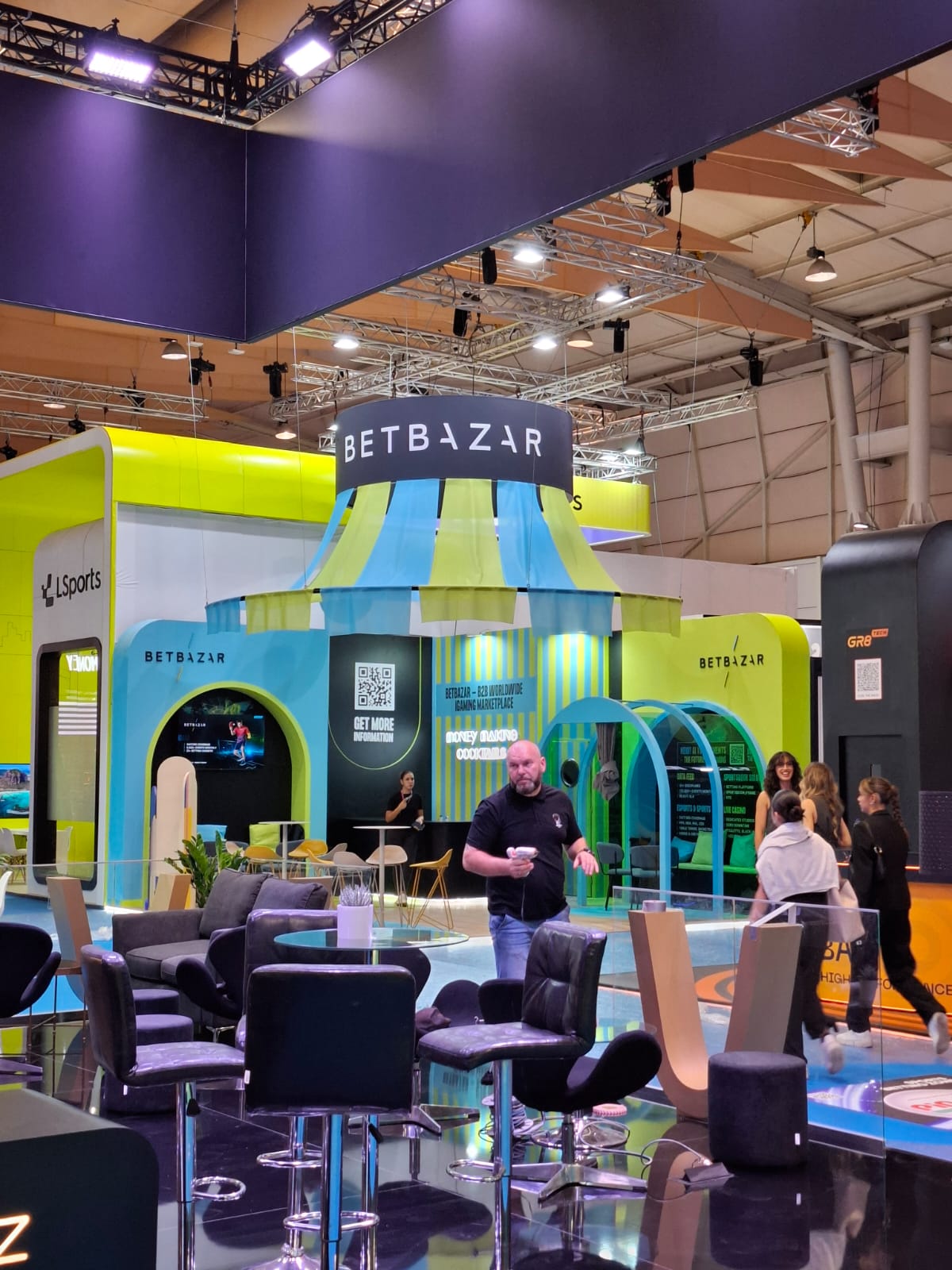
If European trade shows in 2026 have more competition for attention, the winning booth isn’t the loudest—it’s the most readable. Signage and lighting are evolving toward systems that maximize comprehension in seconds: a dominant logo, a single clear claim, and wayfinding that organizes the visitor journey.
The 3-level messaging rule (repeatable procedure):
- Level 1 (3–5 seconds): who you are + category (what you do).
- Level 2 (10–20 seconds): 1–3 concrete benefits (not features).
- Level 3 (30–90 seconds): proof (cases, demos, metrics, certifications, partners).
In 2026, you’ll see more LED backlighting on key elements and more matte fabric graphics to reduce glare in halls with uneven lighting. This isn’t aesthetics—it’s reading performance.
5) Useful Tech: Less “Gadget,” More Intent Capture
In recent years, many tech activations underperformed because they lacked a clear objective. In 2026, the technology that sticks in European booths is the kind that reduces friction and captures intent: faster registration, guided demos, and content visitors can take with them—without relying on printed brochures.
Standalone block: 7 tech uses that typically support ROI
- Badge scanning with clear consent and immediate segmentation.
- Timed demo sessions with simple signage to avoid chaotic lines.
- Digital catalog via QR with UTM tracking by booth zone.
- Screens with short (15–30 second) use-case content.
- Guided interaction (a brief quiz) to qualify interest without interrogation.
- Post-demo feedback (one question) to prioritize follow-up.
- Daily dashboard (leads, demos, meetings, conversation-to-visit ratio).
This ties back to the initial framework: measurement stops being “a report at the end” and becomes a design layer within the booth.
6) Logistics and Installation as a Competitive Advantage: Speed, Safety, and Cost Control
At European trade shows, the real cost of a booth isn’t only fabrication—it’s shipping, installation, upkeep, dismantling, and storage. In 2026, the advantage goes to designs that reduce crew hours and dependence on specialized labor.
Practical indicators of an “efficient booth”
- Install time: fewer steps, fewer tools, fewer fine adjustments.
- Part standardization: fewer variants, more repeatable components.
- Smart packing: cases labeled in installation order.
- Reduced consumables: fewer single-use vinyls, less disposable carpentry.
- Clear electrical plan: modular wiring, defined power points, less improvisation.
This trend connects directly to circularity: a booth that installs faster is usually more modular, and a modular booth is typically more reusable. The relationship is straightforward.
2026 European Trade Show Prep Guide: A 5-Phase Method
To translate “trends” into decisions, you need a repeatable process. This method is designed so you can use it every year and for every show—adjusting variables without rebuilding everything from scratch.
Phase 1: Define a Measurable Booth Objective
- Primary goal: qualified leads, meetings, demos, partners, awareness.
- Primary metric: for example, meetings booked or visit-to-conversation ratio.
- Main constraint: budget, logistics, regulations, available team.
Phase 2: Build the 3-Level Messaging System
- Level 1: brand + category.
- Level 2: benefits and differentiators.
- Level 3: proof (cases, numbers, demo).
Phase 3: Select Modular Architecture and a Reuse Plan
- Fixed modules: structure, lighting, dimensional logos, base furniture.
- Variable modules: graphics, claims, screens, content, activations.
- Lifecycle plan: target number of uses (e.g., 4–8 shows) before refresh.
Phase 4: Prepare Documentation and Sustainability Data
If your organization (or your clients) falls under sustainability reporting expectations, treat the booth as a “documentable” asset. CSRD obligations began applying to initial groups with FY2024 reporting published in 2025, and data pressure continues to expand through the supply chain.
- Inventory and sheets: materials, approximate weights, suppliers.
- Reuse evidence: prior uses and a maintenance plan.
- Waste mapping: what is discarded, what is recycled, and through which partner.
Phase 5: Instrument Measurement and a Sales Follow-Up Plan
- Before: meeting calendar, daily targets, demo script.
- During: segmented capture, minimal notes, simple qualification.
- After: follow-up within 24–72 hours, a metrics report, and learnings for the next show.
Common Mistakes in 2026 Booths (and How to Avoid Them)
- Confusing impact with noise: too many messages reduce comprehension and hurt conversion.
- Designing without a reuse plan: every show “resets” costs and kills efficiency.
- Not documenting materials and changes: makes procurement, compliance, and continuous improvement harder.
- Activations without a measurable goal: tech with no clear ROI.
- Complex installation: higher labor costs, more issues, and more technical dependencies.
Conclusion: How to Turn 2026 Trends into One Coherent Decision
If you had to summarize 2026 Trends in one practical sentence, it would be: the booth shifts from a “set piece” to a measurable, reusable, and documentable system. At European trade shows in 2026, booths stand out because they integrate circularity (modules and materials), compliance (data and documentation), experience (readable messaging and clear flow), and measurement (intent capture and ROI).
The advantage doesn’t come from guessing the future—it comes from building a method that holds up through regulatory changes, shifting show formats, and evolving commercial goals. When you treat the booth as a system, your presence in European trade shows 2026 booths becomes more efficient, more consistent, and more profitable.
FAQs About European Trade Show Booths in 2026
It depends on size, complexity, and the level of reuse. A modular approach often reduces total cost starting from the second or third show because fabrication and installation hours decrease.
Reusable modular structures, replaceable fabric graphics, and repairable components. Prioritize materials with technical sheets and a clear reuse and end-of-life plan.
Define structural modules (dimensions and connectors) and experience modules (demos, meetings, reception). Keep high-cost assets fixed and update only graphics and messaging by campaign.
LED backlighting for the logo and key elements, combined with matte graphics that reduce glare. The goal is readability—not brightness.
Use a clear value proposition, a short demo, and a fast registration flow with simple segmentation. Track visit→conversation and conversation→lead ratios to optimize.
Industrial trade shows often perform best with a technical claim and zoned demos; conferences typically call for tighter messaging, more institutional wayfinding, and calmer conversation areas.
It varies by country and venue, but in 2026 you’ll see stronger expectations around data, traceability, and circularity—driven by reporting pressure and EU policies prioritizing reduction, reuse, and recycling.