
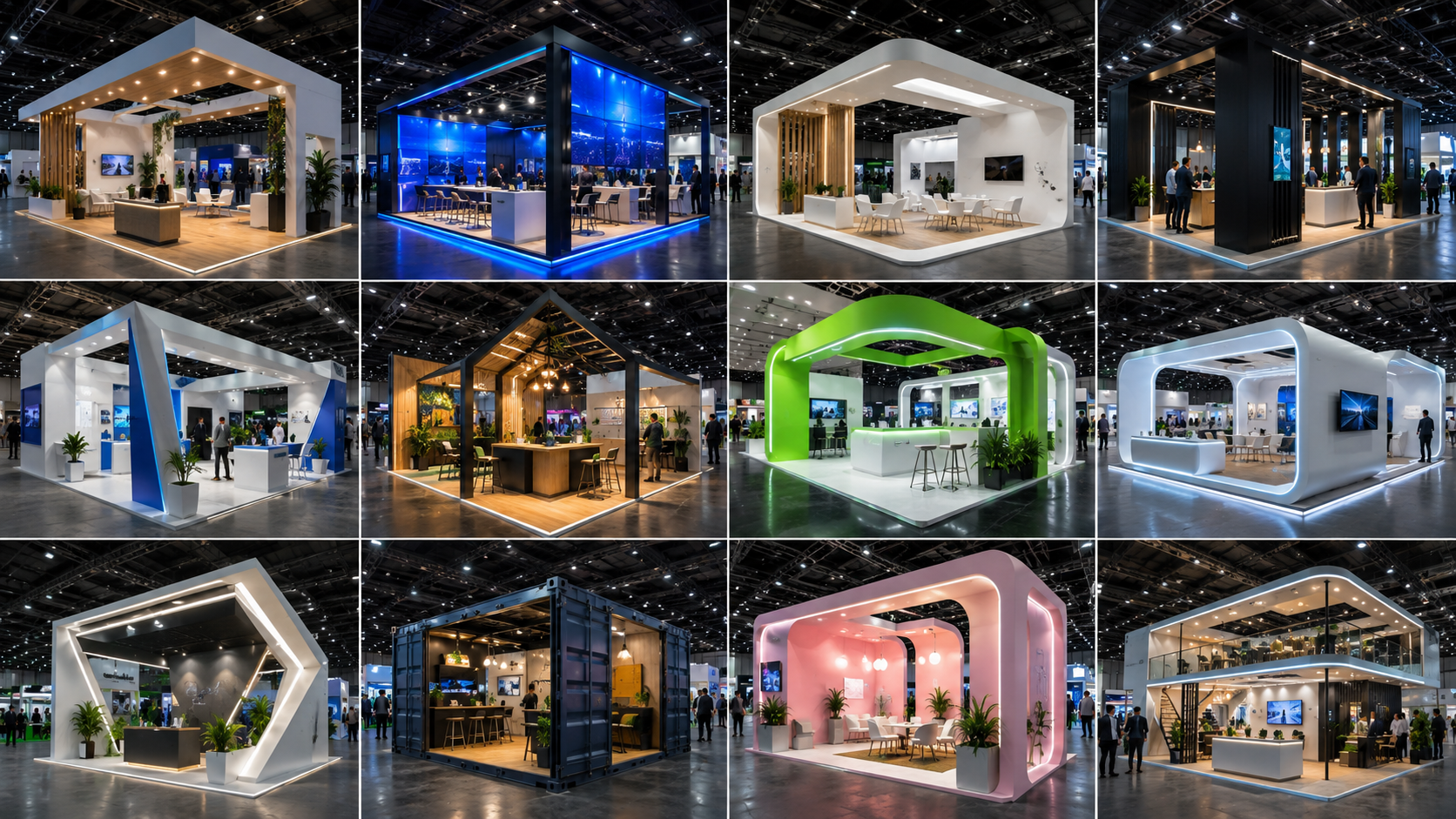
What Makes a Booth Sell More
At trade shows and conferences, not all booths generate the same results. Some attract steady traffic, create relevant conversations, and turn visits into business opportunities. Others, even with large budgets, go unnoticed or deliver little return.
That is why analyzing the booths that sell the most is not only about looking at design or size. The real difference lies in how a booth combines visibility, experience, communication, and commercial functionality.
Within the Top 10 Lists cluster, this article provides a practical comparison of the booth types that perform best at today’s European trade shows and explains why they generate more sales, leads, and opportunities.
The goal is not to identify “the prettiest booth,” but to understand which configurations convert trade show traffic into real results.
Operational Definition: What It Means for a Booth to “Sell”
Booth that sells (definition): an exhibit space designed to attract qualified visitors, facilitate interaction, and increase the likelihood of generating business opportunities.
Common performance indicators:
- Traffic: number of relevant visitors.
- Interaction: conversations started.
- Leads: business contacts captured.
- Conversion: follow-up meetings, quotes, or later sales.
This means an effective booth does not depend on aesthetics alone, but on how it organizes the commercial experience within the space.
The Performance Framework: Why Some Booths Work Better
The booths that generate the strongest results usually share five characteristics:
- High visibility: they stand out from a distance.
- Clear message: visitors quickly understand the offer.
- Open design: they make access and interaction easier.
- Active experience: they invite participation.
- Logical flow: they guide visitors toward a sales conversation.
This same pattern appears, in different formats, across almost all high-performing booths.
1) Open Modular Booth: The Most Cost-Effective for Sales
The open modular booth is one of the most effective formats because it combines accessibility, flexibility, and a strong cost-performance ratio.
Why It Works
- It makes visitor entry easier.
- It reduces physical barriers.
- It allows messages and graphics to be adapted.
Ideal For
- B2B companies.
- Industrial trade shows.
- International events.
Its main advantage is that it improves interaction without driving up production costs.
2) Interactive Experiential Booth: The Best for Engagement
This type of booth is based on active visitor participation.
Common Elements
- Touchscreens.
- Live demos.
- Immersive experiences.
Why It Sells
- It increases dwell time.
- It improves brand recall.
- It facilitates sales conversations.
It works especially well in technology, automotive, and innovation-driven industries.
3) Live Demo Booth: The Most Effective for Complex Products
When a product needs explanation, live demos build trust and understanding.
Advantages
- They reduce doubts.
- They show real functionality.
- They create natural interaction.
Ideal For
- Machinery.
- Software.
- Industrial solutions.
Visitors understand value more clearly when they can see it in action.
4) Premium Brand Booth: The Strongest for Positioning
Premium booths prioritize perception and differentiation.
What Defines Them
- High-quality materials.
- Advanced lighting.
- High-impact dimensional signs.
Why They Sell
- They communicate trust.
- They reinforce positioning.
- They attract higher-value visitors.
They are common in premium sectors and international brands.
5) Booth with Integrated Meeting Areas: The Best for Closing Opportunities
Booths designed for networking and business meetings deliver stronger results at B2B trade shows.
Advantages
- They allow longer conversations.
- They improve privacy.
- They support negotiation.
A booth without a conversation area often loses valuable opportunities.
6) Open Corner Booth: The Most Visible in Medium-to-High Traffic Areas
Corner booths are exposed to two aisles.
Why They Sell More
- Greater visibility.
- More access points.
- Higher visitor flow.
Location remains one of the most important factors in trade show performance.
7) Hybrid Tech Booth: The Most Adaptable
It combines physical structure with digital communication.
Common Elements
- LED signage.
- Dynamic screens.
- Digital lead capture.
Why It Works
- It updates messages quickly.
- It enables personalization.
- It improves the visitor experience.
8) Minimalist Single-Message Booth: The Clearest
Many booths fail because they contain too much information. Minimalist designs work because they simplify the message.
What Makes Them Effective
- High visual clarity.
- Simple hierarchy.
- Less noise.
Simplicity often increases understanding and recall.
9) Reusable Modular Booth: The Best Balance Between Cost and Sales
Reusable modular systems are trending because they combine profitability and scalability.
Advantages
- Long-term cost reduction.
- Adaptation to different events.
- Easy graphic updates.
For companies that exhibit frequently, this is one of the most efficient options.
10) Fully Immersive Experience Booth: The Most Memorable
This type of booth aims to create a complete sensory experience.
Includes
- Ambient lighting.
- Integrated audio.
- Themed scenography.
Why It Sells
- It creates strong recall.
- It increases differentiation.
- It boosts social sharing potential.
It is especially effective for consumer brands and premium experiences.
Quick Comparison: Which Booth Works Best by Objective
- Most cost-effective: reusable modular booth.
- Most visible: open corner booth.
- Most interactive: technology-driven experiential booth.
- Best for meetings: booth with private areas.
- Highest brand impact: premium immersive booth.
What the Best-Selling Booths Have in Common
Although formats vary, the best-performing booths usually share these traits:
- Clear message.
- Easy access.
- Visible signage.
- Intuitive flow.
- Visitor-oriented experience.
The combination of these factors significantly increases the chances of commercial interaction.
Mistakes That Make a Booth Sell Less
- Too much visual information.
- Closed or intimidating design.
- No conversation areas.
- Lack of clarity in the offer.
- Technology with no commercial purpose.
Many times, a booth fails not because of a lack of budget, but because of a lack of strategy.
How Full-Expo Can Help You Build a Booth That Sells More
Full-Expo develops booths focused on commercial performance, combining:
- Strategic design.
- Advanced production.
- High-impact signage.
- Technology integration.
- Visitor experience optimization.
The goal is not only to build an attractive space, but to create a system capable of generating interaction, leads, and real opportunities.
Conclusion: The Booths That Sell the Most Are the Ones That Best Understand the Visitor
The booths that sell the most are not necessarily the biggest or the most expensive. They are the ones designed to make attention, understanding, and conversation easier.
At international trade shows, where decision time is minimal and competition is high, the booth must act as a strategic sales tool.
Companies that understand this logic turn traffic into real opportunities. Companies that do not often turn trade shows into an investment that is difficult to justify.
Working with specialists like Full-Expo makes it possible to design results-driven booths prepared to compete at today’s European trade shows.
Frequently Asked Questions About Booths That Sell the Most (FAQs)
Open, clear, interaction-oriented booths usually generate the strongest commercial results.
The combination of visibility, clear messaging, visitor experience, and ease of interaction.
Not necessarily. A well-designed small booth can generate better results than a poorly organized large booth.
It is essential for capturing attention and communicating the value proposition quickly.
Booths with open spaces and meeting areas are usually the most effective.
By making interaction easy, using clear messages, and creating intuitive visitor flows.
Yes, when the goal is to reinforce positioning and attract high-value visitors.