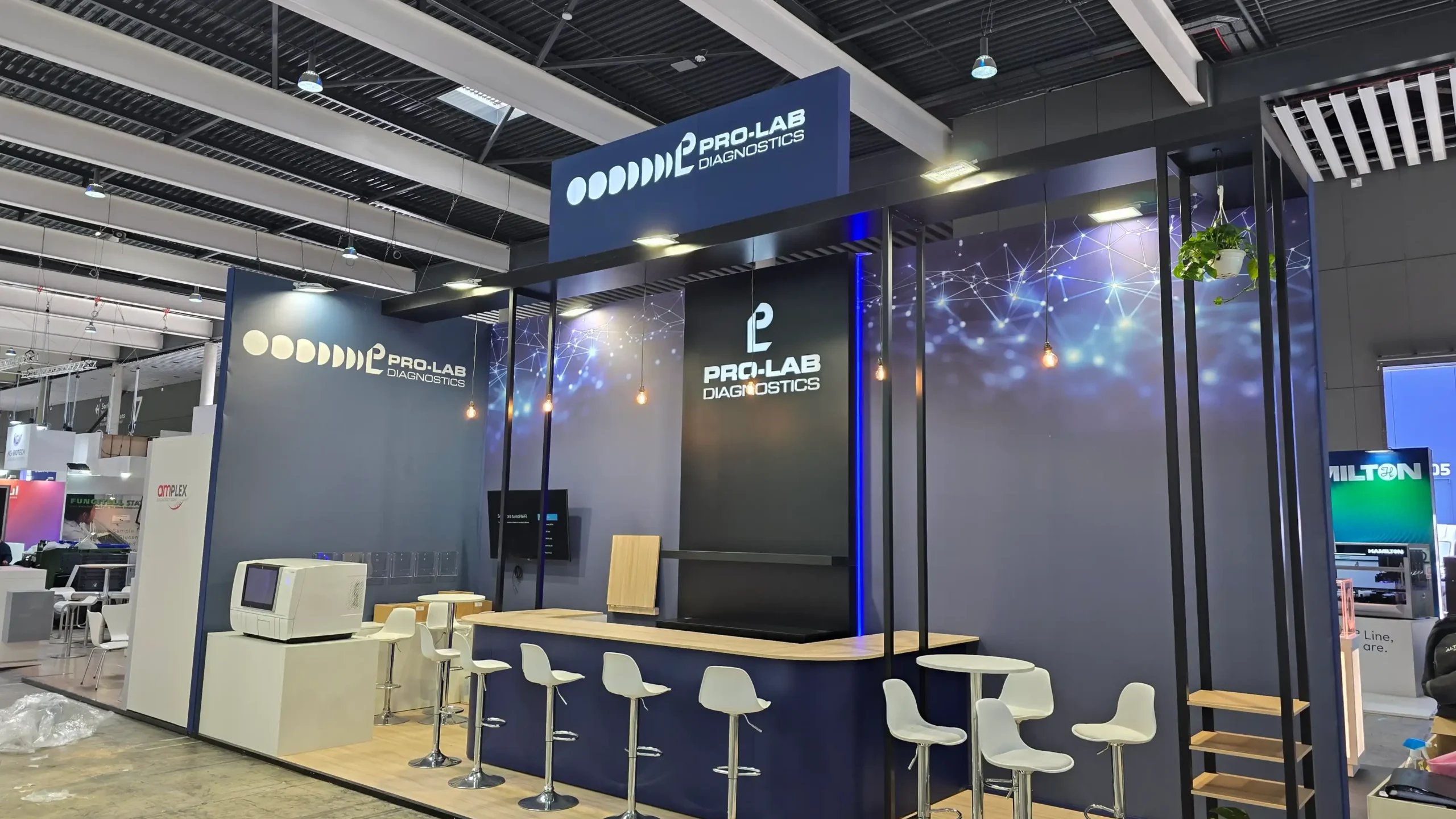
In the design and production of stands for fairs and congresses, choosing the right materials is key to achieving a balance between resistance, aesthetics and ease of assembly. The light materials offer clear advantages in terms of transport, installation and adaptability without compromising the stability and durability of the stand. In this article, we show you what are the best light materials to optimize your stand and how Full-Expo.com integrate them into their innovative solutions.
Why use light materials in the construction of stands?
The choice of light materials allows:
- Reduce logistical costs: Less weight means less volume and savings in transport.
- Facilitate assembly and disassembly: More manageable structures that require less time and effort.
- Increase versatility: Ideal for modular and reusable stands in different events.
- Improving safety: lighter elements involve less risk in assembly operations.
Main light materials used in stands
1. Extruded aluminium
The aluminium is one of the most used materials in the stand structure thanks to its lightness, corrosion resistance and compatibility with modular systems such as beMatrix or Aluvision.
- Advantages: Reusable, stable, aesthetically neutral.
- Uses: Structural frames, towers, highs, modular systems.
2. Foamed PVC panels (Forex)
The Foamed PVC It combines lightness with a uniform and customizable surface for direct printing or rotation.
- Advantages: Light, easy to cut, good graphic finish.
- Uses: Graphic panels, background, decorative separators.
3. Technical textiles with printing
The textile printing large format on polyester fabrics offer lightness and great visual impact, in addition to facilitating transport when folding.
- Advantages: Ultraligeros, without reflexes, easy to mount with silicone profiles.
- Uses: Wallpapers, wall charts, banners, strained ceilings.
4. Bee-nest panels (honeycomb)
Composed by an internal alveolar structure, the Bee nest panels offer great resistance with a minimum weight.
- Advantages: High structural rigidity, low weight.
- Uses: Technical floors, timelines, furniture elements.
5. Extended polystyrene (EPS) and rigid (XPS)
Both materials allow to create volumetric forms, corporeal letters or custom decorative elements.
- Advantages: Very light, easy to carve, customizable.
- Uses: Three-dimensional decoration, signage, scenography.
Tips for integrating light materials without sacrificing resistance
- Combine lightness with structure: It uses materials such as aluminium for the base structure and lighter ones for locks or decoration.
- It uses modular systems: They allow to reuse materials and adjust settings without complications.
- Bet on the smart design: The correct weight distribution and anchorage points increase stability.
- It works with specialized suppliers: In Full-Expo, we advise on the best solutions according to the space, transport and objectives of the event.
Frequently asked questions about light materials for stands
No. When properly designed, light materials combine stability and resistance. In addition, they are in accordance with the safety regulations of the exhibition sites.
Technical textiles and foam PVC (Forex) are excellent options for their good printing surface, lightness and durability.
Yeah. Many of them are designed to be modular and reusable, reducing long-term costs and improving project sustainability.
It significantly reduces transport, handling and storage costs, which is key to international fairs.
Of course. Light materials such as textiles or PVC panels are easily integrated with lighting systems and screens.