
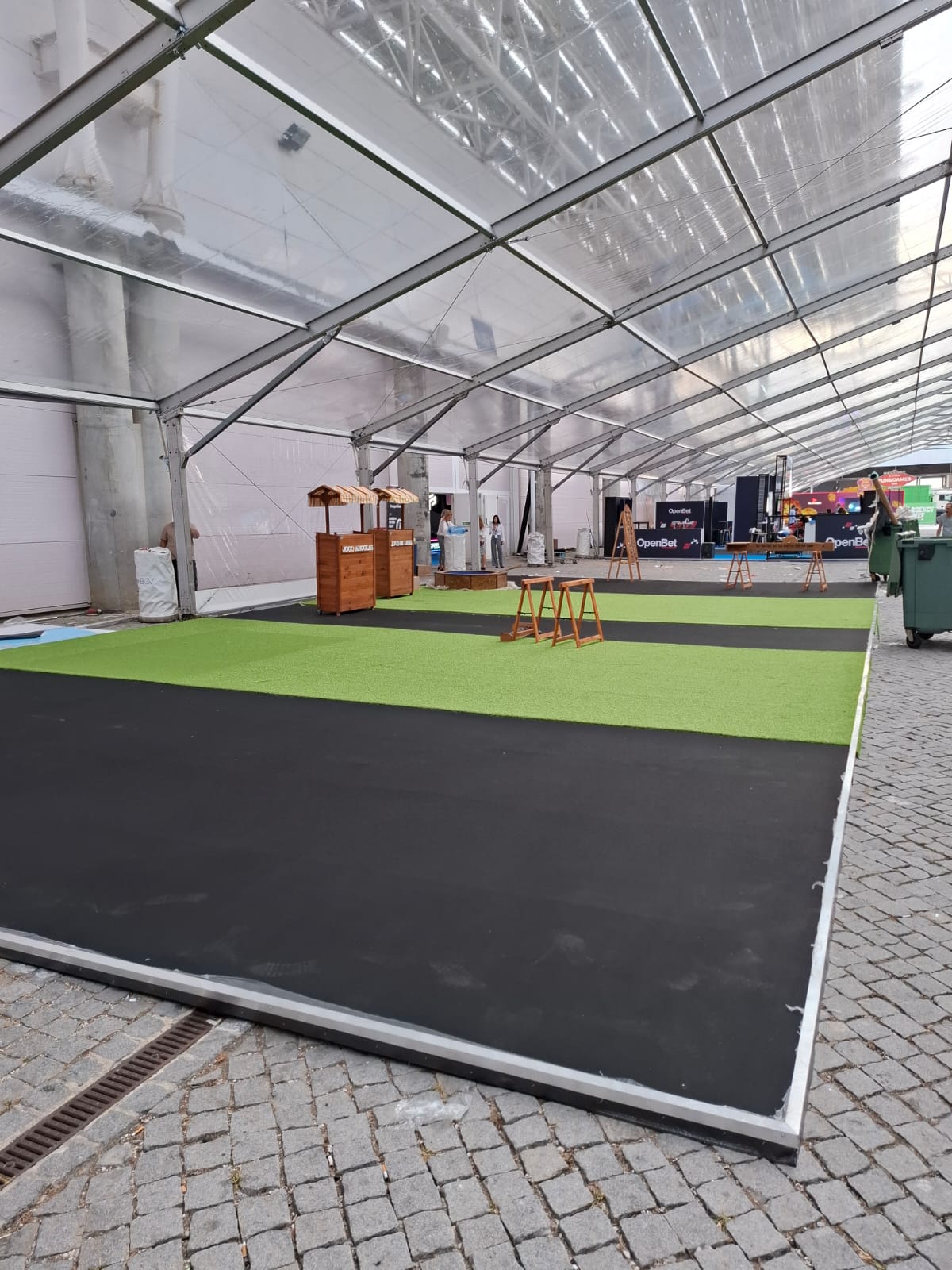
The planning and assembly of a stand for a fair, congress or event requires a precise organization. Know how long it takes to set up a stand is essential to avoid delays, reduce logistical stress and ensure that everything is ready on the day of the opening. From the initial idea to the final delivery of the project, several phases are involved that mark the success of the assembly.
- 1. Planning phase: 3 to 6 months before the event
- 2. Technical design and production: 4 to 8 weeks
- 3. Mounting in a fairground: from 1 to 5 days
- 4. Post-event disassembly and logistics: 1 to 3 days
- 5. Factors influencing the assembly time
- 6. Example of actual set-up schedule
- Frequently asked questions about the assembly time of a stand
- Conclusion
According to data from the Association of Spanish Fairs Organizers (AFE)73% of the delays in the delivery of stands are due to late planning or poor coordination between design, production and assembly equipment. Therefore, knowing the average time limits for each stage is key to organizing your participation in time and without contingency.
1. Planning phase: 3 to 6 months before the event
The first stage begins long before placing the first screw. Efficient planning usually starts between three and six months before the event. During this period the objectives of the participation, the budget, the location of the space and the type of stand that the brand best represents are defined.
- Definition of briefing: set the goals of the stand and target audience.
- Conceptual design: development of creative proposal in 3D.
- Budget and approval: cost and material review.
At this stage, logistical aspects are also managed with the exhibition organization, such as space reserve, licenses and electrical supplies. The sooner this part is closed, the more room there will be to perfect the design and avoid emergency.
2. Technical design and production: 4 to 8 weeks
Once the conceptual design is approved, it is moved to the technical phase, where materials, structures and measures are detailed. This process can last 4 to 8 weeksdepending on the complexity of the project and whether the stand is customized or reusable.
- Production of the stand: manufacture of structures, furniture and decorative elements.
- Workshop assembly tests: verification of adjustments, finishes and stability.
- Logistics preparation: packaging, transport and temporary storage.
Custom stands require more time, especially if they include technological elements, special lighting or audiovisual integration. The reusable stands can be manufactured in less time, as they take advantage of existing structures.
3. Mounting in a fairground: from 1 to 5 days
The physical assembly of the stand in the fairground usually takes place between one and five days before openingdepending on the size and complexity of the project. International or large-scale fairs often require greater anticipation.
- Small stands (up to 30 m ²): 1 or 2 days.
- Medium stands (30-80 m ²): 2 or 3 days.
- Large stands (+ 80 m ²): 3 to 5 days.
The installation of structures, rotations, lighting and technological equipment are carried out during the assembly. A proper coordination between carpentry, electricity and logistics equipment is essential to meet the deadlines without any setbacks.
According to a study of Event Industry Trends Europethe exhibitors that plan the assembly with more than a week of margin reduce in a 45% costs associated with contingency and emergency.
4. Post-event disassembly and logistics: 1 to 3 days
After the closing of the fair, the disassembly begins, which usually lasts between one and three days. This process involves dismantling structures, packaging materials and coordinating return transport. If the stand is reusable, the assembly team reviews and stores the pieces for future events.
- Withdrawal of materials: space cleaning and waste collection.
- Technical review: verification of the status of reusable elements.
- Final report: event assessment and response times.
5. Factors influencing the assembly time
The assembly time of a stand may vary according to different factors:
- Type of stand: a custom design with complex structural elements requires more days than a reusable structure.
- Size and location: the large stands or located in areas with difficult access may need more time.
- Permits and regulations: some European fairs require prior safety inspections before assembly.
- Availability of the premises: time limits depend on the assembly schedule set by the exhibition organisation.
In general, experts recommend planning with at least 12 weeks in advance any set project, to avoid logistical tensions or last-minute overcosts.
6. Example of actual set-up schedule
To illustrate this, a typical 60 m ² stand project can follow this time line:
- 12 weeks before: definition of objectives and briefing.
- 10 weeks before: development of conceptual design.
- 8 weeks before: approval of technical design and budget.
- 6 weeks before: start of manufacture.
- 2 weeks before: installation tests in workshop.
- 1 week before: transport and assembly in the enclosure.
- Event: open to the public.
- 1-2 days later: disassembly and logistical closure.
This schedule may vary by country, type of event and infrastructure of the exhibition site. Fairs like FITUR or ISE Barcelona they often require more in advance of the complexity of the projects.
Frequently asked questions about the assembly time of a stand
A custom stand can take between 6 and 10 weeks to be made, depending on the design, materials and workload of the workshop. Integrated technology projects often require more preparation time.
It is recommended to contact the construction company at least 4 months before the event. This guarantees production availability, cost optimization and quick planning.
In large European events, assembly may take between 4 and 7 days due to technical controls, security inspections and coordination with several local suppliers.
Organizers can impose penalties or even deny access to the event if the stand is not ready in time. In addition, impact is lost in the first days of the fair, reducing return on investment.
The use of software Project Management and planning (such as Trello or Asana) allows to control each phase of the project, coordinate equipment and ensure timely deliveries.
Conclusion
Know how long it takes to set up a stand It is fundamental to ensure success in fairs and congresses. From the initial idea to the disassembly, each phase requires planning, precision and coordination between teams. In Full-Expo We help companies manage the whole process in a comprehensive way, ensuring efficient, safe and timely assembly, so that the brands can focus on the most important: connect with their customers.