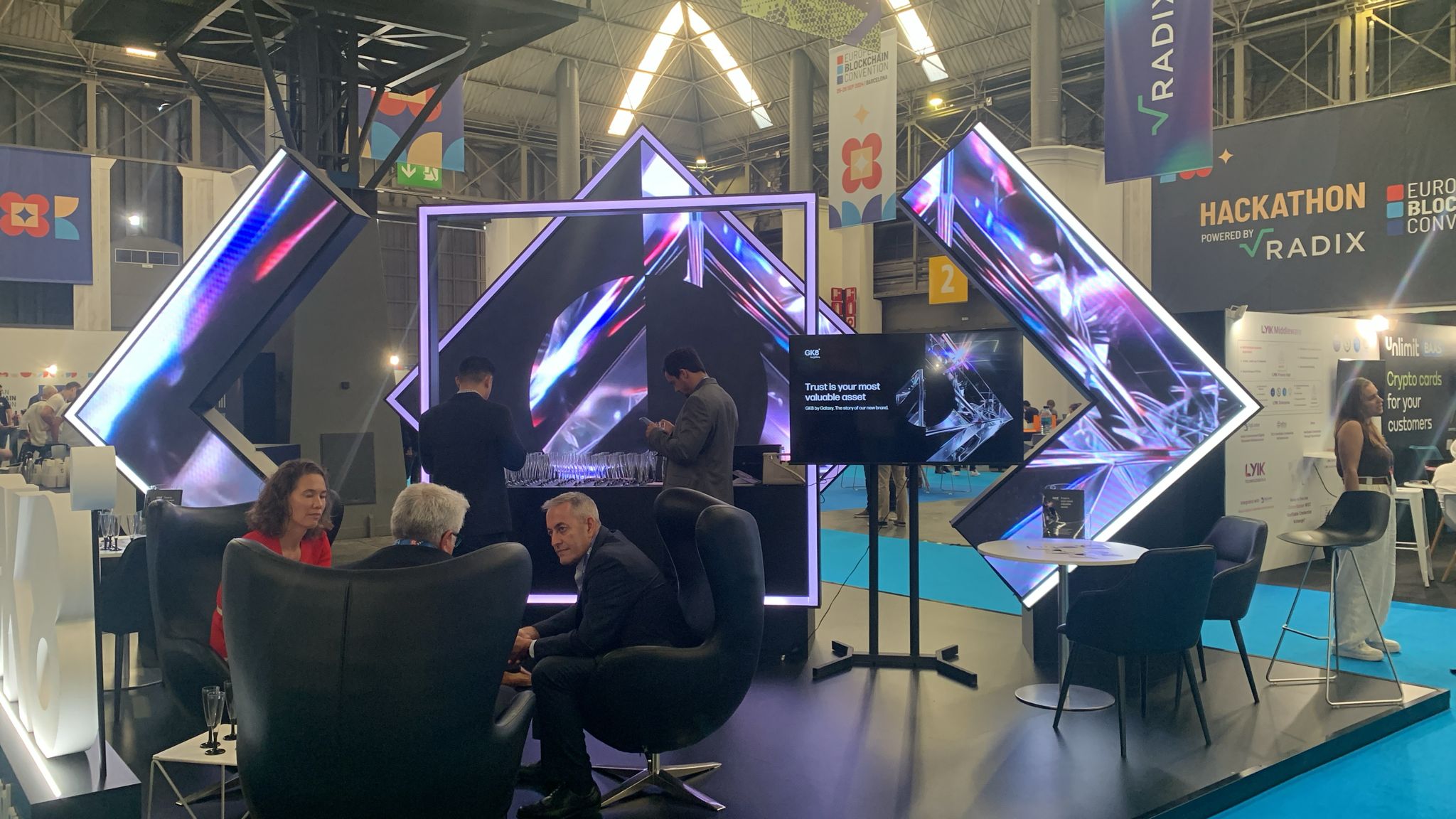
Investing in a stand for fairs and congresses is one of the most effective strategies to increase brand visibility, generate leads and consolidate business relations. However, many companies do not know how to measure the ROI of a stand at fairs and justify the investment to your address or customers. Measuring the return on investment (ROI) correctly allows you to know whether the results obtained compensate the resources for the event.
- What is ROI at fairs and why is it so important to measure it?
- 1. Define your goals before the event
- 2. Calculates all participation costs
- 3. Measure the quantitative results of the event
- 4. Evaluates qualitative results
- 5. Integrates technological tools for analysis
- 6. Analyzes economic return
- 7. Evaluates the emotional and brand ROI
- Frequently asked questions about ROI in stands
- Conclusion
According to the Spanish Marketing Association64% of companies consider that trade fairs generate a greater return than other offline marketing channels, provided there is a clear measurement strategy. In this article we explain how to evaluate results with real data, optimize resources and justify the economic impact of your participation in events.
What is ROI at fairs and why is it so important to measure it?
The ROI (Return on Investment) or return on investment measures the profitability of the shares held at a fair, comparing the profit obtained with the total cost of the participation. In simple terms:
ROI = (Benefit obtained – Investment realized) / Investment realized x 100
Measuring it not only serves to calculate direct economic benefits, but also to assess intangible results such as brand notoriety, positioning against competitors or generating future opportunities.
1. Define your goals before the event
To accurately calculate the ROI of your stand, the first thing is to establish measurable and realistic objectives. Examples include:
- Generate a specific number of qualified leads or contacts.
- Increase direct sales during or after the event.
- Position a new product or service line.
- Increase brand visibility and media presence.
According to CEIR (Center for Exhibition Industry Research)the companies that define measurable objectives achieve a 25% more return than those who don’t.
2. Calculates all participation costs
A common error in measuring the ROI is to underestimate the costs. To get a full view, it includes:
- Design, manufacture and construction of the stand.
- Transport, assembly and disassembly.
- Rental of space and fees of the fair.
- Travel, accommodation and daily subsistence allowance of staff.
- Promotions, gifts and communication materials.
- Digital campaigns prior to and after the event.
A correct budget estimate is essential to identify which investments generate the most impact and which can be optimized.
3. Measure the quantitative results of the event
During and after the fair, collect all possible data. Some key indicators for measuring the ROI of your stand are:
- Number of visitors the stand and its conversion rate.
- Qualified contacts generated and commercial leaders.
- Direct sales and orders made during the event.
- Closed meetings and medium-term opportunities.
- Digital interactions (mentions, clicks, web traffic).
According to data from Exhibition News Europe, companies that analyse the behaviour of visitors using digital tools obtain a 33% more efficiency at your fairs.
4. Evaluates qualitative results
Not all results are measured in figures. The perception of brand, recognition and generated relationships are also part of the return. Some qualitative metrics include:
- Increase in brand notoriety.
- Positive feedback from the public and specialized media.
- Strategic partnerships or subsequent collaborations.
- Strengthening positioning against competition.
A study of Statista (2024) reveals that 58% of brands consider the fairs to be the most effective channel to improve their public perception.
5. Integrates technological tools for analysis
Today, measuring the ROI of a stand is much easier thanks to digital tools. Some useful solutions are:
- Integrated CRM to register and classify contacts in real time.
- Lead capture apps to digitize cards and forms.
- QR codes or landing pages custom to track conversions.
- Software visitor analytics by sensors or counting cameras.
These tools allow you to connect the offline actions of the fair with the online results, creating a global view of the real impact.
6. Analyzes economic return
Once the data are collected, it compares the results obtained with the total investment. For example:
- If you invest €20,000 and get sales worth €50,000, your ROI will be 150%.
- If you also generate leads that result in future sales, that ROI can be increased in the following months.
The brands that analyze your ROI after each event achieve optimize up to 30% of your budgets for future shares, according to MarketingProfs.
7. Evaluates the emotional and brand ROI
In addition to financial return, there are intangible benefits that impact in the long term:
- Brand recognition and remembrance.
- Trust and loyalty of current customers.
- Market position and international visibility.
These factors, although not immediately reflected in figures, are essential for assessing the success of a global holiday strategy.
Frequently asked questions about ROI in stands
It depends on the sector and the type of event. A 100% or more ROI is generally considered positive, i.e. to recover the investment and generate an equivalent or greater additional profit.
Calculates all direct and indirect income generated by the fair and subtract the total costs of participation. Divide that result between the investment and multiply it by 100 to get the percentage.
Qualified leaders, generated sales, stand traffic, social media mentions, customer satisfaction and media coverage.
Yeah. You can use brand recognition surveys, online mention tracking and post-event web traffic evolution.
CRM such as HubSpot or Zoho, lead capture apps, web analytics tools (Google Analytics) and visitor tracking platforms.
Conclusion
Measuring ROI of your stands at fairs and congresses Not only is it a financial issue, but it is a strategic tool to optimize your investments and demonstrate tangible results. With adequate planning, clear objectives and the support of technological tools, you can justify each euro invested and improve the performance of future shares.
In Full-Expo We accompany the agencies and brands throughout the process, from the planning and construction of stands to the evaluation of results, ensuring that each project offers a real and measurable return.